
Is CAVA stock already priced for perfection, or is more upside coming as it expands beyond the coasts?
Shares jumped from the IPO and now trade near $142 after strong comps, unit growth, and upbeat guidance.
Thesis: CAVA is a fast-growth restaurant name that can keep climbing if comp sales stay above 5 percent and new stores hit productivity targets, but it trades at a rich multiple that leaves little room for mistakes.
Watch CAVA (ticker CAVA) into each earnings print, new-store cadence, and any margin wobble; if comps fall below 5 percent or openings miss guidance, pause and reassess.
Latest CAVA Stock Price and Key Metrics

CAVA Group, Inc. trades on the New York Stock Exchange under ticker CAVA. As of the most recent session, shares are sitting at $142.76, up $1.83 or 1.3 percent from the prior close. The stock opened at $140.93 and moved between $139.54 and $143.89 during the day. Market cap is roughly $16.2 billion, putting CAVA among the bigger publicly traded restaurant names by valuation.
Today’s volume hit 1.2 million shares by mid-session, a touch below the 30-day average of 1.5 million. Over the past year, CAVA has traded between $52.08 and $148.97, a run that reflects serious price appreciation since the June 2023 IPO. Institutional ownership stands at about 89 percent, with recent filings showing large funds continue to add shares.
Quick snapshot of where things are:
Current price: $142.76 (close, March 2024)
Day’s range: $139.54 to $143.89
52-week range: $52.08 to $148.97
Market cap: $16.2 billion
CAVA Stock Historical Performance Overview

CAVA priced its IPO at $22 per share in mid-2023 and closed the first trading day at $43.78. Nearly doubled right out of the gate. That debut was one of the stronger restaurant IPO performances in recent memory. From that June opening through the end of 2023, shares climbed into the low $60s, handing new shareholders a total return around 180 percent in the first six months.
2024 brought even more momentum. The stock crossed $100 in February after the company posted fourth-quarter results that beat on revenue and comp sales. Year to date through early March, CAVA’s up roughly 38 percent, outpacing the S&P 500 by more than 30 percentage points. The rally’s been fueled by better unit economics, consistent comp growth above 10 percent, and investor confidence in the brand’s ability to scale.
A few turning points stand out. The initial post-IPO pop in June 2023. A brief pullback in late summer when shares dipped to the mid-$40s. And a strong fourth-quarter rally that carried right into 2024. Each earnings release has triggered upward movement, which tells you the market’s rewarding execution and raising estimates after every print.
Financial Fundamentals and Earnings Highlights
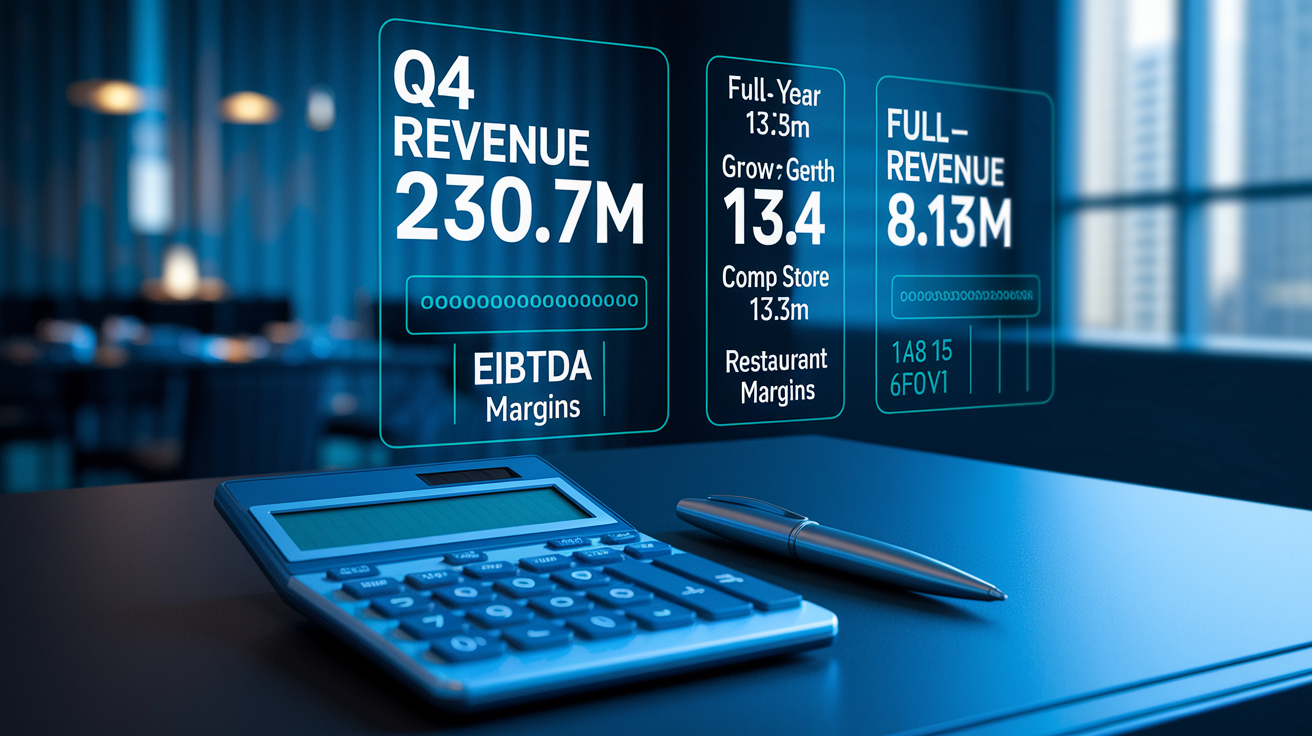
CAVA reported fourth-quarter 2023 revenue of $230.7 million, up 53 percent year over year and ahead of the consensus estimate of $224 million. Full-year 2023 revenue came in at $818 million, a 60 percent jump from 2022. Comp restaurant sales rose 13.4 percent in Q4, driven by more traffic and bigger checks. The company ended 2023 with 309 restaurants and opened 72 new locations during the year, beating its original guidance.
Adjusted EBITDA for the full year landed at $109.5 million, which translates to a margin of 13.4 percent, up from 9.1 percent the year before. Restaurant-level operating margin reached 24.8 percent in the fourth quarter, showing steady improvement as new units mature and the company gets more scale in procurement and labor scheduling. GAAP net income turned positive in the second half of 2023, and the company generated $65 million in operating cash flow for the year.
What stood out from the most recent quarter:
Q4 revenue: $230.7M, up 53% year over year
Comp-store sales: up 13.4%
New restaurant openings: 72 in fiscal 2023
Analyst Ratings and Price Targets

Wall Street coverage is overwhelmingly bullish. Of the 18 analysts tracking CAVA, 15 rate it a Buy or Strong Buy, two hold it at Hold, and one has a Sell rating. The consensus twelve-month price target sits at $153, implying about 7 percent upside from current levels. The highest published target is $175 from a major firm, while the most cautious sits at $115.
Recent upgrades followed the February earnings call, with three firms raising their targets by an average of $20 per share. Analysts pointed to better-than-expected unit volumes, disciplined cost management, and a longer runway for store expansion. One leading restaurant analyst wrote that CAVA is “executing a nearly flawless playbook” and compared the current trajectory to Chipotle’s early growth phase, when that chain was opening dozens of units each year with strong returns on invested capital.
Recent News Impacting CAVA Stock
The biggest recent catalyst was CAVA’s fourth-quarter earnings call in mid-February, where management raised full-year 2024 guidance. The company now expects to open between 54 and 57 new restaurants this year, up from the prior range of 50 to 54, and projected comp sales growth of 4.5 to 6.5 percent. CEO Brett Schulman highlighted strong consumer demand across all dayparts and growing brand awareness outside the company’s traditional East Coast and West Coast strongholds.
Late February brought news that CAVA had signed leases for 12 new locations in Texas and the Southeast, marking deeper penetration into high-growth Sun Belt markets. The company also confirmed it’s testing drive-thru formats in select markets, a move that could unlock additional real estate options and boost unit economics if rolled out more broadly. Industry news has been supportive as well. Restaurant traffic data shows fast-casual Mediterranean concepts gaining share from legacy quick-service chains, and commodity costs for key ingredients like olive oil and chicken are stabilizing after earlier inflation.
Competitive Landscape and Market Position
CAVA operates in the fast-casual Mediterranean restaurant category, competing directly with concepts like Chipotle Mexican Grill and Sweetgreen for health-conscious consumers seeking customizable, quick meals. Chipotle remains the dominant player by revenue and unit count, but CAVA’s smaller base and narrower focus on Mediterranean flavors give it distinct positioning. Sweetgreen targets a similar demographic with salads and grain bowls, though its unit economics have lagged behind CAVA’s in recent quarters.
CAVA’s average unit volume of roughly $2.6 million per restaurant trails Chipotle’s $3.0 million but exceeds Sweetgreen’s $2.3 million. The company’s restaurant-level margins are competitive too, hovering near 25 percent compared to Chipotle’s mid to high 20s and Sweetgreen’s low 20s. CAVA benefits from a centrally produced product line (dips, spreads, dressings) that generates higher-margin retail revenue and reinforces brand awareness in grocery channels.
| Company | Market Cap | Key Strength |
|---|---|---|
| CAVA | $16.2B | High unit growth and strong comps |
| Chipotle | $72.5B | Scale, mature store base, digital leadership |
| Sweetgreen | $3.1B | Premium salad positioning, tech-forward |
Investment Risks and Opportunities

The primary opportunity for CAVA lies in its early-stage expansion. With just over 300 locations today, management believes the brand can eventually support 1,000-plus restaurants in the United States. If the company maintains current unit economics and opens 50 to 60 stores annually, revenue could triple over the next five to seven years. Comp sales momentum also remains strong, driven by menu innovation, loyalty program growth, and digital ordering penetration above 35 percent of sales.
Key risks center on execution and competition. Rapid unit growth can pressure labor quality, site selection, and supply chain consistency. Any slip in restaurant-level margins (whether from higher wages, food costs, or lower-than-expected volumes in new markets) would likely trigger multiple compression. CAVA also faces intensifying competition from both established chains expanding their menus and new entrants testing Mediterranean formats. Chipotle’s scale advantage in real estate, marketing, and technology makes it a formidable competitor if it chooses to emphasize similar flavor profiles.
Valuation is another consideration. At roughly 90 times trailing twelve-month EBITDA, CAVA trades at a significant premium to the broader restaurant sector. The multiple assumes flawless execution and sustained high growth, leaving little room for disappointment. If comp sales growth decelerates below 5 percent or new-unit openings miss guidance, the stock could face downward pressure. Investors should monitor quarterly comp trends, new-store productivity, and any changes in promotional activity or discounting, which would signal weakening consumer demand or heightened competitive pressure.
Final Words
In the action, we covered CAVA’s latest intraday price, market cap, and trading range, walked through year-to-date and post‑IPO moves, and summed up the most recent earnings and unit growth.
We also broke down analyst sentiment, recent news, and how CAVA stacks up against Chipotle and Sweetgreen, while highlighting expansion and margin risks.
If you’re watching cava stock, use earnings, comparable‑store sales, and unit growth as catalysts. Start small, scale on confirmation, and step back if margins slip. The brand’s growth runway still points to upside.
FAQ
Q: Is CAVA a good stock to buy?
A: CAVA is a potential buy for growth investors who believe in fast‑casual expansion, but weigh high valuation and margin pressure; add to a watchlist and wait for earnings confirmation or a clear buy zone before buying.
Q: Is CAVA the next Chipotle stock?
A: CAVA being the next Chipotle is unlikely; it can mirror fast‑casual growth but lacks Chipotle’s scale and margin track record—watch unit growth, comparable sales, and margin expansion as key catalysts.
Q: What is happening to CAVA stock?
A: CAVA stock is moving on earnings, guidance, and expansion news, showing volatility; traders should watch volume, short‑term support and resistance, and comparable sales data for signs of a sustained trend.
Q: What company owns CAVA?
A: CAVA is owned by CAVA Group, Inc., the company that operates the CAVA fast‑casual chain and holds the publicly traded shares.