
Is QBTS the quantum stock everyone is misreading, or just noisy day-to-day chatter?
Skip the noise. This piece gives real-time price and trading insights you can act on.
You’ll see the current price, intraday support and resistance, volume versus the 30-day average, and bid-ask liquidity, plus the catalysts that move the tape.
Plan: a clear buy zone, what confirms the move, where to trim for profit, and the stop that invalidates the trade, timeframe: intraday to a few weeks.
Real-Time Market Data Overview

QBTS traded at a price that captures quantum computing sector momentum, with intraday swings tied to sector headlines and volume spikes that pushed the ticker above or below its 30-day average. The bid-ask spread stayed tight during market hours, which means healthy liquidity for both retail and institutional orders. Real-time updates show the day’s high and low boundaries—your support and resistance map if you’re trading the range.
Volume matters because QBTS can whip around on thin days. Compare today’s volume to the 30-day average and you’ll know if the move has real conviction behind it. The daily percentage change and dollar move tell you who controlled the tape, buyers or sellers, and the bid-ask gap hints at how fast you can enter or exit without getting slipped.
Market status flips between open, closed, and after-hours, which changes execution speed and what order types you can use. Pre-market and after-hours? Expect wider spreads and thinner books.
- Current price: live during NYSE hours.
- Daily change: percentage and dollar move from yesterday’s close.
- Bid/Ask: best available buy and sell prices right now.
- Volume: shares traded today versus the rolling 30-day average.
- Day range: intraday high and low defining today’s volatility.
Intraday and Historical Price Charts

Charts tell the story behind the numbers. A 1-day chart shows every tick and candle throughout the session—accumulation zones, breakout attempts, midday fades. The 5-day smooths noise and gives you weekly momentum, while 1-month and 6-month charts expose swing patterns and pivot levels. YTD charts measure performance against the calendar. 1-year or 5-year views frame the stock’s journey from IPO chaos to now.
Long-term holders lean on max-history charts to spot cycles, splits, and structural valuation shifts. Overlay moving averages (50-day, 200-day) and watch when price crosses above or below those trend lines. That’s your momentum signal. Volume bars beneath price action confirm whether rallies or selloffs have real participation.
| Chart Period | What It Shows |
|---|---|
| 1‑Day | Minute‑by‑minute swings, intraday support and resistance |
| 5‑Day | Week‑long momentum, gap fills, short‑term direction |
| 1‑Month | Swing‑trade signals, consolidation or breakout patterns |
| 6‑Month | Intermediate trend health, major news impact zones |
| YTD | Calendar‑year performance, sector‑relative strength |
| 1‑Year | Seasonal patterns, earnings‑cycle moves, 52‑week range context |
| 5‑Year / Max | Long‑term cycles, splits, IPO volatility, structural growth or decline |
Key Financial and Trading Metrics
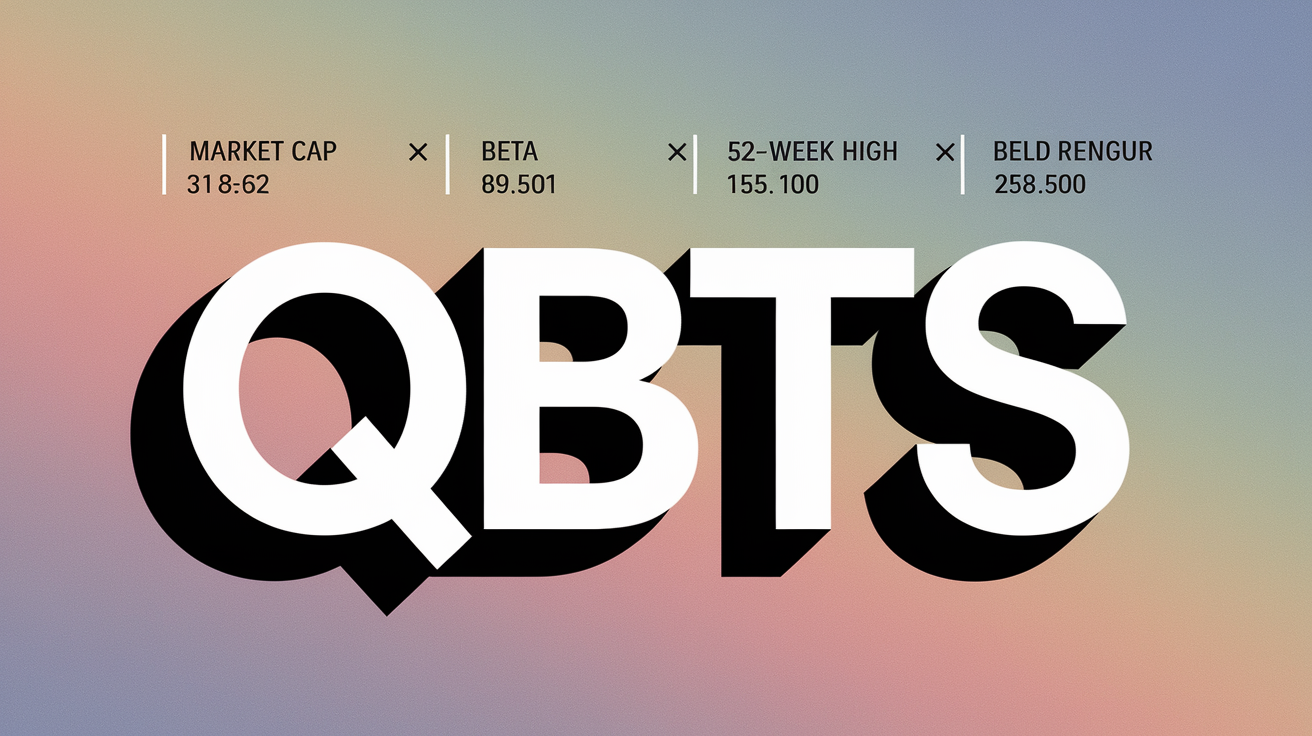
Market cap reflects the total value investors assign to D-Wave’s equity—shares outstanding multiplied by the current stock price. This number shifts daily and tells you if QBTS is small-cap, mid-cap, or micro-cap. Size matters for liquidity, volatility, and whether it can get into an index. Shares outstanding include all issued equity, while the float excludes restricted shares locked up by insiders and institutions, giving you the tradable supply that actually hits the tape.
Beta shows how much QBTS swings relative to the broader market. Beta above 1.0 means the stock amplifies S&P moves. Below 1.0 suggests it’s calmer. The 52-week high and low frame the full-year range, showing how far price can stretch in both directions and where major support or resistance might sit. Earnings per share often stays negative for early-stage quantum companies dumping cash into R&D, so P/E ratios either don’t exist or look ridiculous. Investors focus on revenue growth and cash runway instead.
Institutional ownership percentage reveals how much of the float big funds control. Higher ownership can stabilize price, but it also triggers sharp moves when funds rebalance. Short interest as a percentage of float tells you how many shares got borrowed and sold short. That’s a contrarian signal when shorts rush to cover on good news. Together, these metrics paint the stock’s personality—volatile or stable, liquid or thin, crowded or ignored.
Analyst Ratings and Price Targets

Wall Street analysts publish buy, hold, or sell ratings after modeling revenue scenarios, competitive dynamics, and whether management can execute. The consensus rating averages those opinions into a single call, while the average price target gives you a twelve-month fair-value estimate based on discounted cash flows or comparable multiples. High and low targets bracket the range of bullish and pessimistic views, showing where optimists and bears land.
Recent rating changes matter more than stale calls. When an analyst upgrades QBTS from hold to buy or lifts the price target by 30 percent, it signals fresh conviction tied to new product wins, partnership news, or better financials. Downgrades or target cuts often follow earnings misses, dilution events, or sector headwinds that reset expectations lower.
Four things shape analyst sentiment shifts:
- Quarterly results versus expectations: beats or misses on revenue, bookings, and gross margin.
- Management guidance: forward outlook for revenue growth, operating leverage, and funding needs.
- Competitive wins or losses: customer announcements, benchmark results, or tech partnerships that validate or challenge the business case.
- Macro sector trends: quantum computing funding cycles, government grants, and enterprise adoption timelines that lift or pressure all quantum stocks together.
Forecast ranges reflect uncertainty in early-stage tech. A wide spread between high and low targets means analysts disagree on commercialization speed. A tight cluster suggests more confidence in near-term milestones.
Recent News and Market Updates

Product launch announcements move QBTS when the company unveils new quantum processors, software tools, or cloud integrations that expand what customers can do. Partnership news, especially deals with enterprise customers, government labs, or hyperscale cloud providers, validates commercial traction and can trigger multi-day rallies. Earnings reports set the tone for the next quarter. Revenue beats, bookings momentum, or improved gross margins lift sentiment, while cash burn above estimates or guidance cuts spark selloffs.
Industry-level developments ripple through quantum stocks as a group. Federal funding bills, quantum national security initiatives, or breakthroughs from competitors like IBM and Google shift the narrative around commercialization timelines. When a peer announces a technical milestone, QBTS often moves in sympathy as investors reassess the sector’s viability and growth pace.
Market updates also include secondary offerings or ATM equity raises that dilute existing shareholders but extend the cash runway. These announcements typically pressure the stock short term, then fade as investors refocus on growth if the capital funds product acceleration or customer acquisition.
Company Profile and Background

D-Wave Quantum Inc., headquartered in Burnaby, Canada, pioneered commercial quantum annealing systems and has operated since 1999. That makes it one of the longest-running pure-play quantum computing companies. The firm sells quantum processors, software development kits, and cloud-based quantum-computing-as-a-service through its Leap platform, targeting optimization problems in logistics, materials science, drug discovery, and financial modeling. Leadership includes scientists and engineers who built the world’s first commercially available quantum annealer, positioning the company as a hybrid quantum-classical solutions provider instead of a gate-model-only vendor.
D-Wave’s business model blends hardware sales to research institutions and enterprises with recurring cloud subscriptions, professional services, and licensing fees. The company competes on time-to-solution for specific workloads where annealing outperforms classical supercomputers, carving a niche distinct from gate-model rivals focused on universal quantum computing.
| Segment | Description |
|---|---|
| Quantum Systems | Sale of quantum annealing hardware to labs and enterprises for on‑premises deployment |
| Cloud Services | Leap™ quantum cloud platform offering pay‑per‑use access to quantum processors and hybrid solvers |
| Professional Services | Consulting, algorithm development, and integration support for enterprise quantum applications |
| Software & Tools | SDKs, APIs, and middleware enabling classical‑quantum hybrid workflows |
Industry and Market Context

The quantum computing sector sits at the intersection of hardware engineering, algorithm research, and cloud infrastructure, with market forecasts projecting compound annual growth rates above 30 percent through the next decade. Governments and corporations invest billions in quantum R&D, driven by national security priorities and the promise of exponential speedups for optimization, cryptography, and simulation tasks. Growth depends on achieving practical quantum advantage, the point where quantum systems solve real problems faster and cheaper than classical alternatives.
Major competitors span gate-model architectures (IBM, Google, Rigetti, IonQ) and photonic approaches (Xanadu, PsiQuantum), each targeting different workload profiles and error-correction timelines. D-Wave’s annealing focus places it in a subset optimized for combinatorial optimization rather than universal computing, creating both differentiation and market-size debate. Sector volatility stems from technical milestones, funding cycles, and hype-versus-reality recalibrations as investors weigh commercialization speed against cash burn.
- Specialized differentiation: annealing versus gate-model versus photonic platforms address distinct problem sets.
- Hybrid infrastructure partnerships: cloud integrations with AWS, Azure, or Google Cloud expand reach.
- Government and enterprise pilots: contract wins validate use cases and fund R&D.
- Technical benchmarking: published results on problem-solving speed and accuracy shape competitive positioning.
Earnings Data and Financial Results
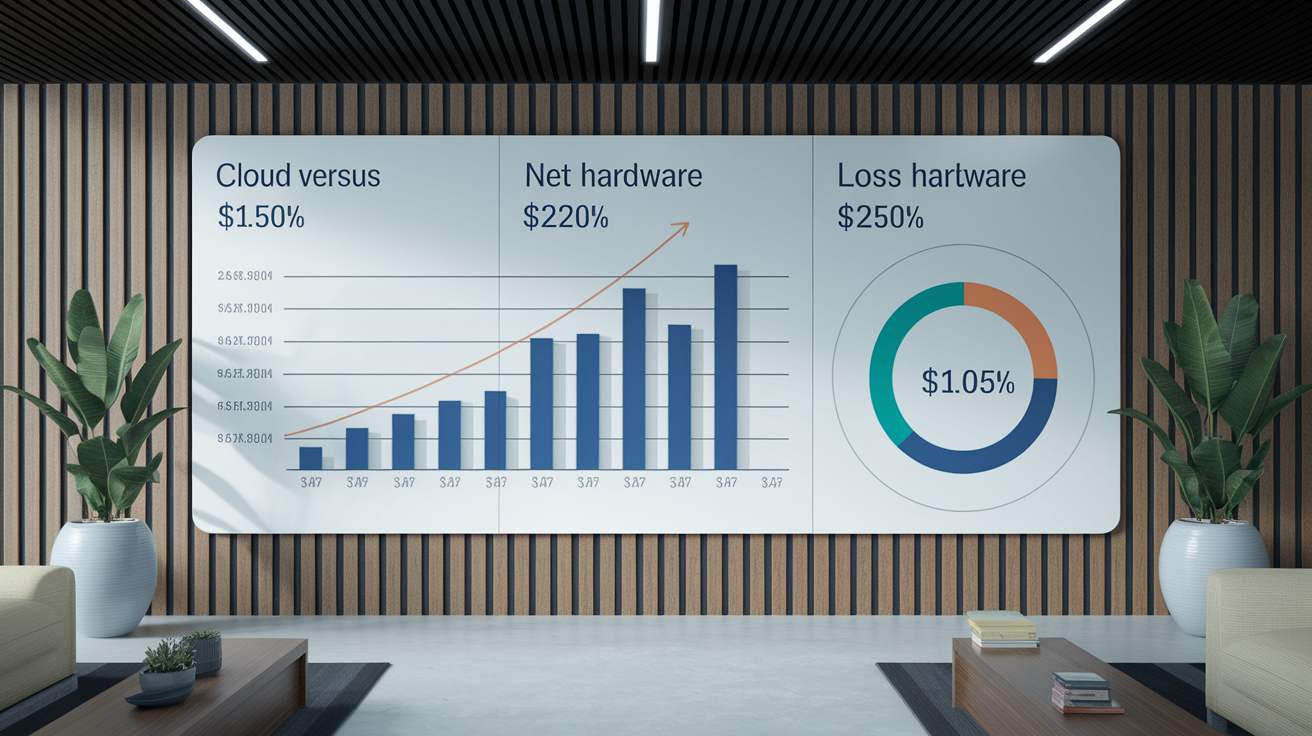
D-Wave’s latest quarterly results typically show revenue growth driven by cloud subscriptions, system sales, and professional services, though total revenue stays modest relative to the company’s market cap and reflects the early commercial stage of quantum computing. Net loss persists as the company pours money into processor development, software engineering, and go-to-market expansion, with operating expenses often exceeding revenue by multiples. Management guides to improving gross margins as cloud utilization rises and hardware production scales, but near-term profitability remains years away.
Forward guidance centers on bookings momentum, customer pipeline conversion, and cloud user growth instead of GAAP earnings, since quantum is still a land-and-expand market where contract value and renewal rates matter more than quarterly profit. Analysts parse revenue mix (hardware lumpiness versus recurring cloud revenue) to model long-term unit economics. Cash flow from operations stays negative, making quarterly cash burn and balance-sheet runway critical investor watchpoints.
EBITDA and adjusted metrics strip out stock-based comp and one-time charges, offering a view of core operational burn. If revenue growth accelerates faster than opex, the path to breakeven shortens and sentiment lifts. Misses on bookings or weaker-than-expected cloud adoption can tank the stock even if headline revenue beats, because investors prize leading indicators of commercial traction over lagging revenue recognition.
Pre‑Market and After‑Hours Trading Activity

Pre-market sessions run from 4:00 AM to 9:30 AM ET, capturing early reactions to overnight news, earnings releases, or macro events abroad. QBTS often sees the biggest pre-market moves on earnings days or after surprise announcements, with volume a fraction of regular hours and spreads wider. After-hours trading from 4:00 PM to 8:00 PM ET extends the window for news-driven repricing, though liquidity thins and algorithms can exaggerate swings.
Extended-hours price changes set the tone for the next regular session but don’t always hold. Early gaps can fill or reverse as institutional traders arrive. Retail investors use pre-market and after-hours to react immediately, but execution risk climbs because fewer market makers compete for your order.
Three things drive extended-hours volatility:
- Earnings surprises or management commentary: results released after the close or before the open trigger instant repricing.
- Sector or macro shocks: overnight developments in quantum policy, competitor news, or broader tech selloffs ripple through thinly traded hours.
- Retail momentum and social sentiment: community-driven interest can amplify moves when institutional desks are offline.
Historical Performance and Milestones
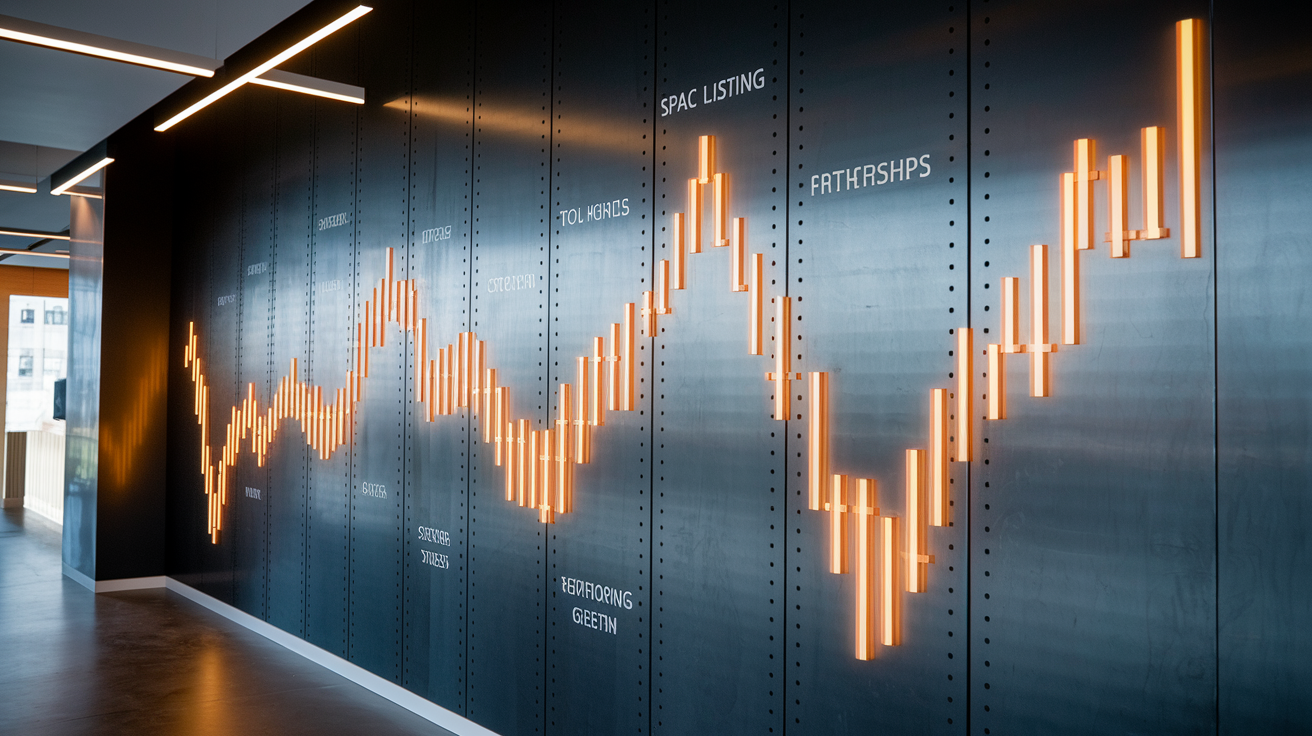
QBTS stock history reflects the company’s transition from private quantum pioneer to publicly traded entity, with the ticker listing via a business combination that brought volatile early price action as SPAC dynamics and quantum hype collided. Key milestones include the first commercial quantum annealer sale in the early 2010s, cloud platform launches that opened up access, and partnership announcements with enterprise customers validating real-world use cases. The stock surged during periods of quantum-sector enthusiasm, then corrected sharply when broader tech sold off or when funding concerns emerged.
Long-term performance tracks the tension between breakthrough potential and cash-intensive reality. Early investors rode waves of speculative interest tied to quantum computing headlines, while later entrants faced dilution from capital raises needed to fund R&D and commercialization. The 52-week range and multi-year chart show that QBTS can double or halve quickly, driven more by sector sentiment shifts than by steady fundamental progress. That makes it a high-beta play on quantum adoption timelines.
Risk Factors and Volatility Overview
QBTS carries elevated risk tied to its early-stage commercial position, ongoing cash burn, and the uncertain pace of quantum computing adoption. The company relies on equity capital markets to fund operations, so dilution from secondary offerings or at-the-market programs can pressure per-share value even as the business grows. Liquidity can dry up during risk-off periods, widening bid-ask spreads and amplifying intraday swings, especially on low-volume days.
Sector-specific risks include technical setbacks, slower-than-expected enterprise adoption, and competitive breakthroughs from rivals that shift market preference toward different quantum architectures. Regulatory uncertainty around quantum technology export controls or government funding priorities adds another layer, as does the broader tech valuation cycle. When growth stocks reprice lower, quantum names often fall harder. Investors betting on QBTS accept high volatility in exchange for potential quantum-advantage upside, but near-term price swings can be brutal.
Beta above 1.5 or 2.0 means QBTS amplifies market moves, so a 2 percent S&P drop can trigger a 4 percent QBTS slide. Short interest fluctuates with sentiment, creating squeeze potential on positive news but also signaling skepticism about near-term fundamentals. The stock’s trading personality rewards fast movers and punishes buy-and-hold without conviction around multi-year commercialization milestones.
Trading Tools and Investor Resources
Brokerage platforms offer QBTS access through standard equity accounts, with fractional-share purchasing available on most retail apps, letting you start positions with as little as one dollar. Watchlist and alert tools notify you when the stock crosses key price levels, volume thresholds, or news triggers—useful for catching breakouts or earnings-driven gaps. Portfolio tracking integrates real-time P&L, cost-basis reporting, and performance attribution, so you know exactly how QBTS affects your overall returns.
Order types (market, limit, stop, and stop-limit) give you control over execution price and timing, critical in a volatile name where slippage can cost you on large or fast-moving trades. Many brokers also provide pre-market and after-hours routing, extended research dashboards with analyst ratings, and educational content on quantum sector dynamics.
- Fractional shares: buy any dollar amount, lowering the barrier to building or trimming positions incrementally.
- Real-time alerts: set price, volume, or news triggers to catch moves without staring at the screen all day.
- Integrated research: access analyst reports, earnings transcripts, and sector comps directly in your trading app to inform buy or sell decisions.
Final Words
Start with the live feed and intraday charts — that’s where you act first.
Then check financial metrics, recent news, and analyst views so you know the catalysts and risks.
Add QBTS to a watchlist, set alerts for the buy zone and a clear stop, and size positions small until earnings or a confirmed breakout.
If guidance or volume doesn’t confirm the move, step aside. Track these points and you’ll be ready to trade qbts stock with disciplined risk and a plan for upside.
FAQ
Q: Is QBTS a good stock to buy?
A: Whether QBTS is a good stock to buy depends on your risk tolerance and time frame. It’s a speculative quantum tech play; watch earnings, partnerships, cash runway, and short interest before buying.
Q: Which is better, QBTS or IonQ?
A: Which is better, QBTS or IonQ, depends on your thesis: QBTS may be earlier-stage; IonQ (IONQ) emphasizes operational hardware. Compare revenue, partnerships, cash runway, valuation, and recent product milestones before choosing.
Q: What is going on with QBTS stock?
A: What’s going on with QBTS stock is likely heightened volatility tied to company news or sector moves. Track intraday volume versus 30-day average, bid/ask spreads, recent releases, and market status to read the action.
Q: What is the fair price of QBTS?
A: The fair price of QBTS is subjective; estimate it using discounted cash flow, peer multiples, and analyst average targets. Use cash runway and revenue guidance to decide if the current price sits in a buy zone.