
You check your phone at 7:00 PM and see your stock just jumped 12 percent. No regular trading happened. No news you can find. Welcome to after-hours trading, where prices move on lower volume, wider spreads, and catalysts that companies drop once the main session closes. Understanding what drives these moves and how thin liquidity amplifies every order helps you decide whether to react tonight or wait until the opening bell tomorrow when real depth returns.
Key Drivers That Move Stock Prices in After‑Hours Trading

After‑hours trading runs from 4:00 PM to 8:00 PM ET, right after the regular market session closes. During this window, order matching shifts from centralized exchanges to electronic communication networks like ARCA, INET, and BATS. Buyers and sellers connect directly without a continuous open auction. This structural shift removes the depth and price discovery that define regular hours. Every trade matters more. Every quote becomes less stable.
Companies, institutions, and regulatory bodies release material information after the closing bell. They know that lower liquidity and fewer retail participants will limit immediate execution pressure. Earnings reports land between 4:00 and 5:00 PM ET. Guidance updates appear in 8‑K filings. Merger announcements hit newswires when the auction floor goes dark. These catalysts drive immediate price reactions because fewer participants can absorb or counteract the news. The first wave of orders sets a directional tone that may or may not hold when liquidity returns at 9:30 AM the next day.
Volume in after‑hours sessions drops below 10 to 20 percent of regular session levels. That strips away the order book depth that usually cushions large trades. Bid‑ask spreads widen, often by multiples of their daytime range. A single mid‑size order can push a stock several percentage points in seconds. The result? Exaggerated volatility. A $500,000 buy that barely registers during regular hours might spike a thinly traded name 8 percent after the close. Then that move fades or reverses entirely when the opening auction aggregates overnight demand.
Common immediate catalysts that move stock prices after hours:
- Earnings releases and quarterly reports published at or after 4:00 PM ET, especially surprise beats or misses that differ from consensus estimates.
- Guidance revisions and outlook updates issued alongside earnings or in standalone press releases after the close.
- SEC filings like Form 8‑K disclosures covering acquisitions, divestitures, executive changes, or covenant breaches filed after regular trading ends.
- M&A announcements and takeover rumors that surface after 4:00 PM, causing target shares to jump toward the offer price or sparking speculation driven moves in acquirers.
- Analyst upgrades, downgrades, and target price changes released after the bell by research desks that time their calls to avoid intraday disruption.
- Macroeconomic or geopolitical developments occurring outside US market hours. Central bank decisions, commodity shocks, international conflicts, or policy announcements that influence sentiment and index futures overnight.
How After‑Hours Market Mechanics Influence Stock Price Movements

Order matching in after‑hours sessions happens on electronic communication networks rather than through the primary listed exchange’s continuous auction. Each ECN maintains its own order book, so a quote displayed on ARCA may differ from the quote on INET or BATS at the same moment. This fragmentation makes the “best” price harder to determine. Trade prints arrive on the consolidated tape with delays. Price discovery becomes incomplete. Without a central limit order book aggregating all bids and offers, participants see only a slice of available liquidity. Execution quality depends on which venue routes the order.
Depth collapses after 4:00 PM. A stock that trades five million shares during regular hours might see only 200,000 shares change hands between 4:00 and 8:00 PM. Most of that volume concentrates in the first thirty minutes after the close. Bid‑ask spreads that measure two or three cents intraday can balloon to twenty or fifty cents. Or wider. Once liquidity providers step back, brokers respond by restricting order types. Many platforms accept only limit orders in extended hours. They refuse market orders outright to protect clients from unpredictable fills. Even when market orders are allowed, execution can occur far from the last quoted price, producing severe slippage that would be unthinkable during regular trading.
| Mechanism | Effect on Price |
|---|---|
| ECN fragmentation | Quotes vary across venues; best price is harder to find; delayed tape prints reduce transparency |
| Thin liquidity | Small orders create large percentage moves; order books lack depth to absorb normal trade sizes |
| Spread widening | Transaction costs rise; slippage increases; fills occur at prices far from the midpoint |
| Limited order types | Market orders often rejected or produce extreme fills; traders forced to use limit orders and accept non‑execution risk |
Earnings and Corporate News That Move Stocks After Hours

Companies schedule earnings releases after the close to give investors time to digest results without the pressure of live trading. And to avoid intraday volatility that might trigger circuit breakers or disrupt orderly price discovery. The bulk of after‑hours earnings land between 4:00 and 5:00 PM ET. Some companies wait until 5:30 or 6:00 PM to publish results. This timing places the initial reaction squarely in the window when liquidity is thinnest and spreads are widest. The first wave of buy or sell orders faces minimal resistance and can move the stock violently in either direction.
An earnings surprise can trigger a 10 to 15 percent move within minutes. Say, a mid‑cap software company that closes at $48.00 jumps to $54.00 in after‑hours trading on a beat. Only to see that gain trim to $51.00 by the time pre‑market trading begins at 7:00 AM the next day as more participants arrive and liquidity improves. A miss can send shares down 12 percent before any analyst has published a note. Simply because the order imbalance is immediate and unchecked by depth.
Corporate press releases, guidance updates, and SEC filings routinely accompany or follow earnings reports. An 8‑K filing might disclose a change in the CFO, a covenant breach, or the signing of a definitive merger agreement. All material events that move prices. Guidance revisions carry particular weight. Management raising full year revenue targets after a solid quarter can amplify an earnings beat. A cut to forward EBITDA guidance can erase any positive surprise in the just reported period. Product launch announcements, FDA approval letters, and executive departures also land after hours. Each one capable of reshaping the investment thesis in the span of a single press release.
Five earnings related catalysts that drive after‑hours moves:
- Earnings beats where reported EPS exceeds consensus by a material margin, triggering immediate buy orders.
- Earnings misses that fall short of estimates, prompting rapid sell offs before deeper analysis begins.
- Revenue surprises (positive or negative) that signal demand trends and operational momentum beyond bottom line results.
- Revised guidance raising or lowering forward targets for revenue, earnings, or margins, which resets expectations for future quarters.
- Major press releases announcing acquisitions, divestitures, restructurings, leadership changes, or regulatory approvals that alter the company’s strategic path.
M&A, Analyst Actions, and Institutional Flow That Move After‑Hours Prices

Merger and acquisition announcements frequently arrive after 4:00 PM ET. They’re timed to allow all parties to finalize documentation and coordinate disclosure outside trading hours. When a buyer offers $25.00 per share for a target currently trading at $18.00, the target’s stock typically jumps toward $25 in after‑hours trading. Sometimes reaching $24.50 or higher if arbitrageurs believe the deal will close without regulatory challenge. The acquirer’s shares may drift lower on dilution concerns or financing uncertainty. Both moves happen with minimal liquidity to smooth the adjustment, producing sharp intraday style volatility in a post market environment.
Large institutional orders and block trades also influence after‑hours prices even when no headline catalyst is present. A pension fund or hedge fund may use the post market window to execute a significant position, routing the order through a dark pool or crossing network that prints to the tape after the fact. These block prints, sometimes millions of dollars in a single execution, can signal conviction or urgency. Other participants react by adjusting their own bids and offers. The result is a price move driven by flow rather than news. Because liquidity is so constrained, the move can be as dramatic as any earnings driven gap.
Five non‑earnings catalysts:
- Analyst upgrades issued after the close, often accompanied by raised price targets that trigger immediate buying.
- Analyst downgrades published after hours, which can send shares lower before the market reopens and broader selling begins.
- Block prints showing large institutional trades that hint at positioning changes or undisclosed information.
- Dark pool signals where off exchange volume concentrates at specific price levels, suggesting hidden demand or supply.
- Takeover rumors circulating on social feeds or leaked by sources, driving speculative bids that may or may not materialize into formal offers.
Macro, Futures, and Global Events Impacting After‑Hours Stock Prices

Index futures like S&P 500, Nasdaq‑100, and Dow trade nearly around the clock. They serve as the primary sentiment gauge between the 4:00 PM ET close and the 9:30 AM ET open. When S&P futures drop 1.5 percent overnight on news of a surprise interest rate hike abroad, that move filters directly into after‑hours stock prices as participants adjust their bids to reflect the changed risk environment. Futures influence individual equities more powerfully in extended hours because there are fewer competing signals and less arbitrage capital available to correct dislocations. A futures sell off can drag down even stocks with no company specific news.
Commodity price swings and currency movements also reshape after‑hours sentiment. A sharp rise in crude oil after OPEC announces an unexpected production cut will lift energy stocks in post market trading. A sudden strengthening of the dollar might pressure multinational technology names that derive significant revenue overseas. Geopolitical developments like military conflicts, trade policy announcements, central bank emergency meetings often occur outside US market hours and immediately influence global equity markets. The impact shows up in after‑hours US stock prices before the domestic session reopens.
Four macro forces that move after‑hours prices:
- Futures moves in S&P, Nasdaq, or Dow contracts that signal broad risk on or risk off sentiment and guide individual stock adjustments.
- Central bank actions such as surprise rate changes, quantitative easing announcements, or emergency liquidity measures released after US market hours.
- Commodity shocks including sharp moves in oil, natural gas, or precious metals that affect sector specific equities overnight.
- Geopolitical news covering conflicts, sanctions, treaty negotiations, or policy shifts that alter the global growth outlook and risk appetite.
Tracking, Monitoring, and Interpreting After‑Hours Price Movements
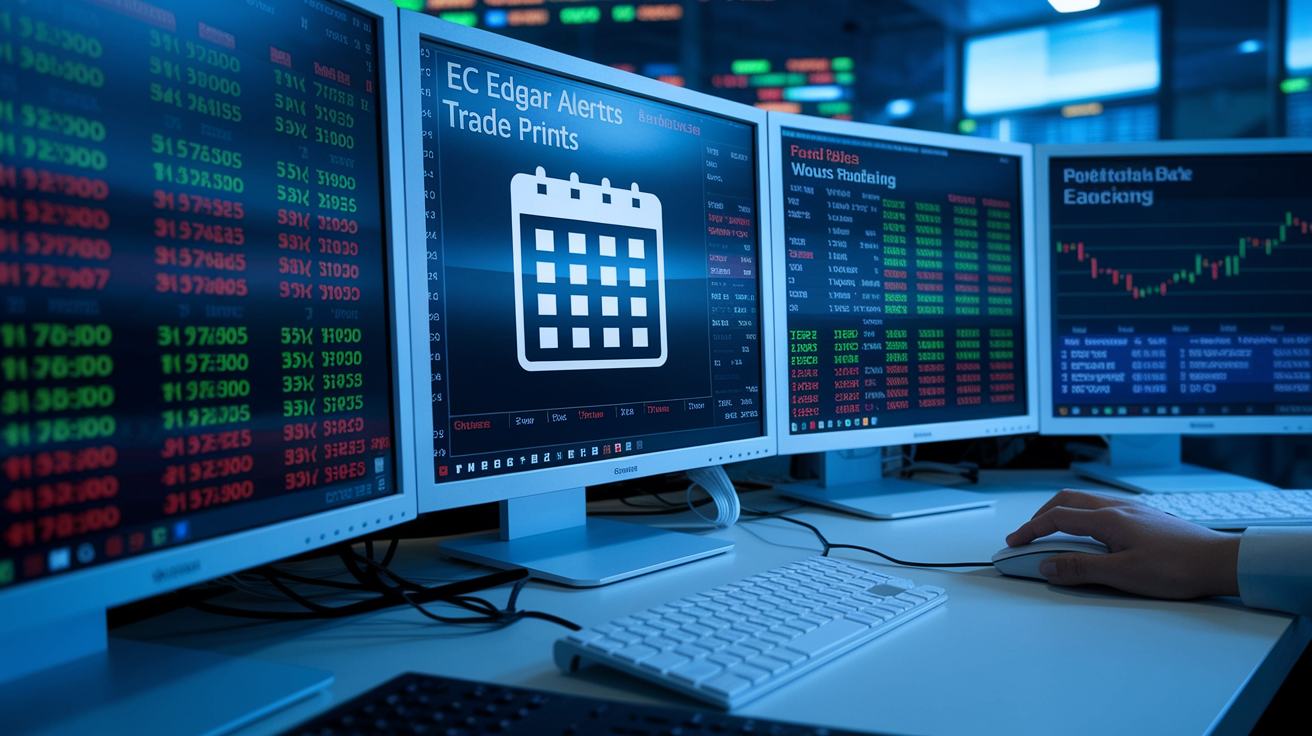
Effective after‑hours monitoring begins with knowing where material information appears and when it’s likely to hit. SEC EDGAR publishes 8‑K filings in real time. Setting up alerts for specific tickers ensures that guidance changes, M&A disclosures, and executive departures land in your feed the moment the company files. Earnings calendars list expected release times. Most aggregators note whether a company reports “after market close” or provide an exact timestamp. Cross referencing that schedule with company investor relations pages confirms the timing and reduces the chance of missing a surprise early release or delay.
ECN quotes and post market trade prints provide the raw data for after‑hours price action, but interpreting them requires caution. A single 500 share trade might move a stock $0.40 if no other orders are nearby. Creating the appearance of momentum that evaporates when liquidity returns. Volume data matters. If a stock trades 50,000 shares after hours compared to a regular session average of two million, that thin participation means the after‑hours price is more headline than consensus. Comparing after‑hours prints to pre‑market activity the next morning, when volume typically rises and spreads tighten, offers a clearer picture of whether the overnight move reflects genuine demand or was simply a function of limited depth.
Liquidity peaks in the first thirty minutes after the close and decays rapidly after 6:00 PM ET. Monitoring between 4:00 and 4:30 PM captures the most reliable price signals. That window sees the highest concentration of informed institutional flow and the tightest spreads of the extended session. By 7:00 PM, many participants have stepped away. Only algorithmic market makers and a handful of retail orders remain. Moves during that late window carry less informational value and higher execution risk.
| Resource | What It Provides |
|---|---|
| SEC EDGAR | Real‑time 8‑K filings, press releases, and material event disclosures; free access; filterable by ticker |
| Earnings calendars | Expected release dates and times; many note “after close” or specific hour; cross‑check with company IR pages |
| ECN quotes and tape | Post‑market bids, asks, and trade prints from ARCA, INET, BATS; shows actual execution prices and volume; may be delayed on free platforms |
Risks That Create Volatility and Price Distortion After Hours
Bid‑ask spreads that measure a few cents during regular hours can widen to fifty cents or more after the close. That multiplies transaction costs and makes it nearly impossible to exit a position at a predictable price. A stock quoted at $50.00 bid and $50.05 ask at 3:59 PM might show $49.80 bid and $50.30 ask at 4:15 PM. That half dollar spread means every round trip costs 1 percent before any price move occurs. Slippage rises sharply when depth falls below a few hundred shares per price level. Partial fills become common because no single counterparty is willing to absorb a full order at the displayed quote.
After‑hours moves often reverse at the next day’s open. A 12 percent post market jump on an earnings beat might shrink to 6 percent by 9:30 AM as more sellers arrive and profit takers trim positions accumulated overnight. A harsh after‑hours sell off can moderate when institutional buyers step in during pre‑market or at the opening auction, recognizing that the initial reaction overshot fundamentals. This gap risk creates uncertainty for anyone holding a position through the close or trying to trade during extended hours. The price at 4:30 PM isn’t a reliable anchor for the price at 9:31 AM.
Four primary risks:
- Spread widening that raises transaction costs, reduces execution certainty, and makes it expensive to enter or exit positions.
- Slippage caused by thin order books where even modest orders fill far from the midpoint or the last quoted price.
- Partial fills where only a fraction of an order executes, leaving the remainder unfilled and forcing the trader to re‑enter at a worse price or cancel.
- Overnight gaps where after‑hours enthusiasm or panic reverses at the open, creating sudden profit or loss that wasn’t foreseeable from the extended session action alone.
Practical After‑Hours Trading Strategies and Risk Controls

Use limit orders exclusively in after‑hours sessions. A market order submitted at 4:10 PM might execute several percentage points away from the last trade if no matching limit order exists near the current quote. Many brokers will reject market orders outright to protect clients from that outcome. Setting a limit price, even one slightly away from the inside market, ensures you control the worst case execution and accept non‑execution as the cost of that control. If a stock is quoted $52.00 bid and $52.50 ask, placing a limit buy at $52.30 gives you a clear maximum cost and avoids chasing a move that might evaporate in minutes.
Reduce position size when trading after hours. The same dollar amount that represents a standard entry during regular hours carries higher risk in thin liquidity. Cutting size by half or more compensates for the elevated volatility and wider spreads. Focus on high liquidity names. Exchange traded funds like SPY and QQQ, or heavily traded large caps like AAPL and TSLA, where after‑hours volume remains relatively robust and spreads stay tighter than in mid or small cap stocks that see only sporadic post market activity.
Monitor both after‑hours prints and next day pre‑market action before drawing conclusions. A stock that rallies 8 percent after hours on an earnings beat deserves attention. But confirming that the move holds or extends into pre‑market trading, and then through the opening auction, provides far more confidence than acting on the initial 4:15 PM print alone. If after‑hours volume is light and the move reverses by 7:00 AM, the signal was noise rather than conviction. Waiting saved capital.
Five actionable rules:
- Use limit orders to control execution price and avoid unpredictable market order fills in low liquidity environments.
- Reduce size by half or more compared to regular session trades, compensating for higher volatility and execution uncertainty.
- Trade liquid names like SPY, QQQ, AAPL, or TSLA where after‑hours volume and depth are higher, and spreads remain manageable.
- Monitor ECN volumes and compare after‑hours trade counts to regular session averages to gauge the reliability of the price signal.
- Confirm trends next day by checking pre‑market prints and the opening auction before committing additional capital or sizing up positions.
Final Words
In the action we laid out why after-hours move. ECNs replace regular auctions, earnings and press releases land after the close, and M&A, analyst notes, futures, and thin liquidity can make prices swing hard.
What to do is watch 4:00 to 4:30 PM volume, use limit orders, size trades smaller, follow ECN quotes, and confirm moves next morning.
Bottom line if you want to know what moves stock prices after hours focus on timing, liquidity, and clear catalysts, and manage risk. Stay patient, you’ll trade smarter.
FAQ
Q: What makes a stock price move after-hours?
A: A stock price moves after-hours because news and much lower liquidity let small orders swing quotes—earnings, 8-Ks, M&A, analyst moves, block prints, and futures. Watch 4:00–5:00 PM releases and use limit orders.
Q: What is the 3-5-7 rule in stocks?
A: The 3-5-7 rule is a short-term confirmation tool: check price action after 3, 5, then 7 trading days. If support holds across those windows, consider adding; if it fails, step aside.
Q: What is the 90% rule in trading?
A: The 90% rule in trading is a stop-loss discipline: cut a position after it loses about 90 percent of its value to avoid total wipeout. It enforces strict loss control and capital preservation.
Q: What is the 10 am rule in stocks?
A: The 10 am rule says wait until 10:00 AM ET for the market’s direction to settle; if price confirms a trend by then, consider trading it; if not, stay flat to avoid open volatility.