
What if recessions are the best time to borrow but the worst time to save?
Recession interest rates usually fall fast when spending and lending dry up.
That drop helps variable-rate borrowers and new loans, opens refinancing windows, and squeezes deposit APYs for savers.
The Fed cuts the funds rate and investors flee to Treasuries, pushing mortgage and long-term yields lower.
This post breaks down which loan types move first, the concrete levels to watch, and a simple plan to act or sit tight.
If rates stop falling or inflation spikes, the play changes.
I’ll show the red flags.
How Interest Rates Typically Move During a Recession

Interest rates fall during recessions. It’s not complicated. When people stop spending and businesses stop expanding, there’s less demand for loans. Banks cut rates to keep borrowers interested. The Federal Reserve usually slashes the federal funds rate at the same time to get spending and investment moving again.
The National Bureau of Economic Research dates recessions using more than just the “two consecutive quarters of negative GDP” shortcut you hear about. NBER tracks GDP, income, consumer spending, and unemployment to figure out when a recession actually starts and stops. Once the Fed sees recessionary conditions forming, it moves fast. During the Great Recession and the 2020 pandemic recession, the effective federal funds rate dropped to near zero within months.
But not every loan responds the same way:
Variable-rate loans adjust down as benchmark rates fall. Your adjustable-rate mortgage, home equity line, or private student loan? Monthly payments drop.
New loans get priced at the new, lower rates. Fresh mortgages, auto loans, personal loans all become cheaper to take out.
Existing fixed-rate loans don’t budge unless you refinance. Your 30-year mortgage at 6.5 percent stays there until you pay it off or refi.
Credit cards tied to prime rate might see APR cuts, though some issuers slow-roll the reduction or don’t pass through the full amount.
Refinancing windows open when market rates fall below your current locked rate. That’s your chance to capture savings.
Variable and new loans grab recession rate drops first. If you’re locked into a fixed rate, you’ve got to take action.
Economic Conditions That Drive Interest Rate Changes in Recessions
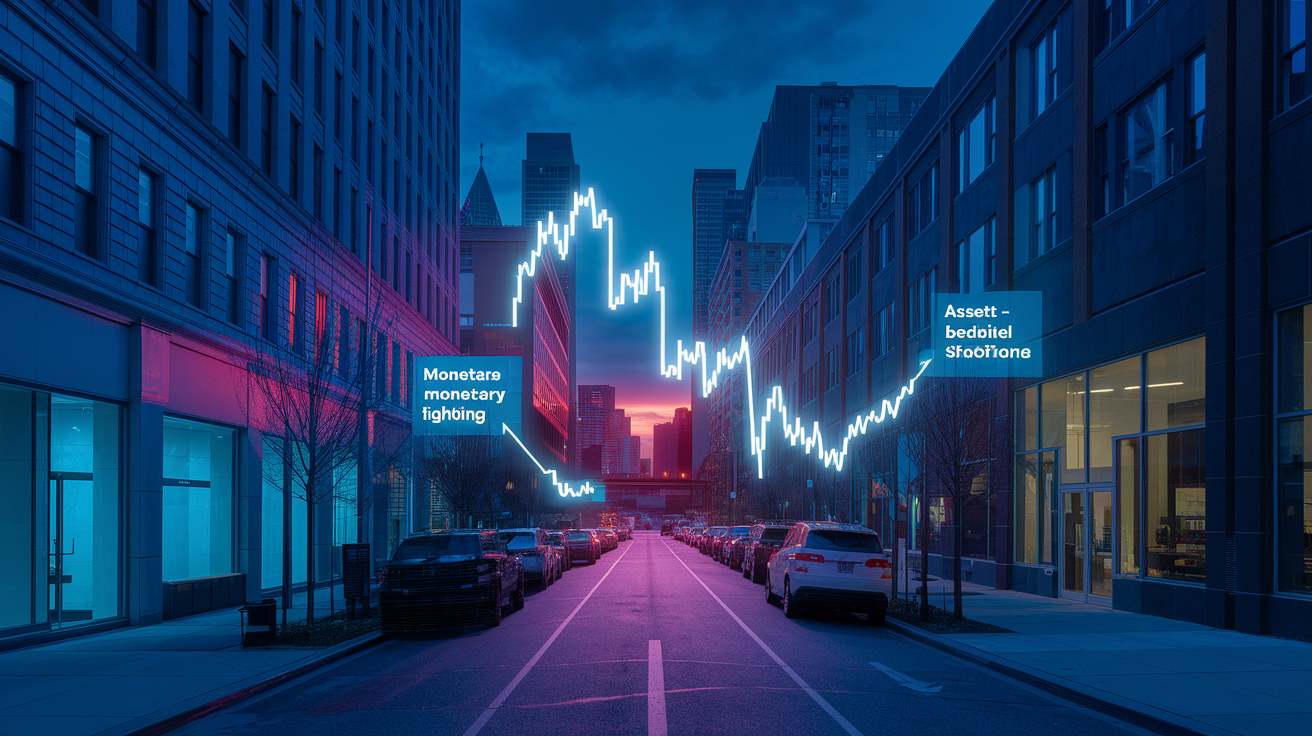
Recessions shrink economic activity, and that forces rates lower. Households cut back, businesses delay projects, layoffs climb. Demand for credit dries up. Lenders see fewer qualified borrowers, so they drop rates to keep loans flowing. Lower inflation expectations during downturns also push nominal rates down because lenders don’t need to price in future erosion of purchasing power.
The yield curve often inverts before recessions show up. Short-term Treasury yields climb above long-term yields. Once the recession starts, the Fed cuts short-term rates hard while long-term yields drift lower as investors run to safety. The inversion corrects, the curve steepens, and the whole downward shift pulls borrowing costs with it. Unemployment spikes, consumer confidence tanks, GDP contracts. All of it reinforces the Fed’s urgency to keep rates low until recovery takes hold.
Four common triggers show up across cycles:
Demand shocks from pandemics, energy crises, or sudden collapses in consumer confidence.
Monetary tightening when the Fed raises rates too aggressively to fight inflation and tips the economy into contraction.
Asset-bubble bursts like the housing crash that kicked off the Great Recession.
Geopolitical events that disrupt trade, rattle markets, and freeze business investment.
Each trigger creates its own timeline and severity. But the rate-policy playbook stays the same: cut hard, cut early, stay low until expansion resumes.
Federal Reserve Policy and How It Shapes Recession Interest Rates
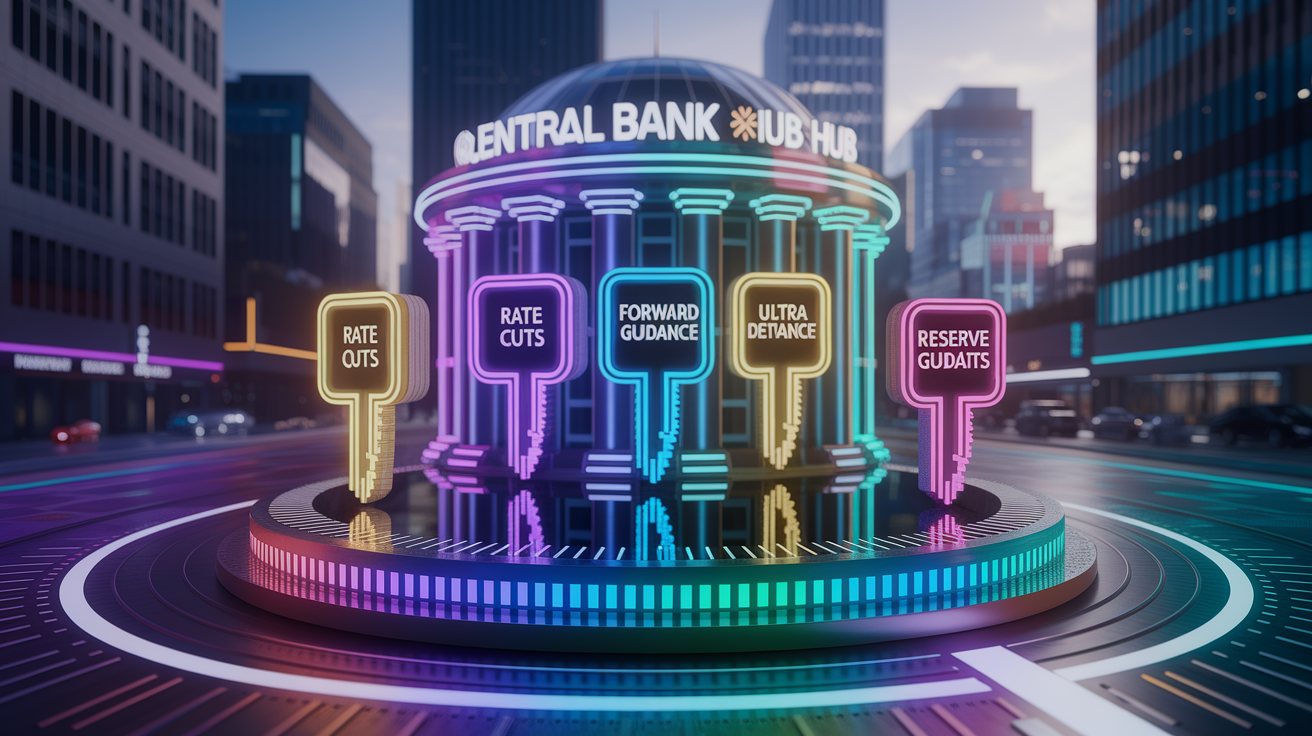
The Federal Reserve uses the federal funds rate as its main tool to either cool an overheating economy or restart a stalled one. That rate sets the cost of overnight borrowing between banks. When the Fed lowers it, banks can borrow reserves cheaper, and that ripples through to what they charge you. During recessions, the Fed often cuts the funds rate in 25 or 50 basis-point chunks at regular meetings. Sometimes it announces emergency cuts between meetings when conditions worsen fast.
Rate cuts don’t travel through the financial system evenly. Short-term products like savings accounts, money market funds, and variable-rate loans adjust within days or weeks. Long-term products like mortgages respond slower because they track the 10-year Treasury yield, which moves on growth and inflation expectations rather than the funds rate alone. Banks also lower deposit rates right alongside policy cuts, squeezing what savers earn. The lag between Fed action and real-world impact can stretch six to twelve months. The full stimulative effect shows up well after the initial cut.
The Fed doesn’t just rely on rate cuts. During severe downturns, it deploys quantitative easing, buying Treasury bonds and mortgage-backed securities to push long-term yields lower. It can adjust reserve requirements, use forward guidance to anchor expectations, or open emergency lending facilities to keep credit flowing when private markets freeze.
| Tool | What It Does | Effect During Recession |
|---|---|---|
| Federal funds rate cuts | Lowers overnight interbank borrowing cost | Reduces short-term loan rates and deposit APYs quickly |
| Quantitative easing (QE) | Buys long-term bonds to inject liquidity and lower yields | Pushes mortgage and corporate-bond rates lower when policy rate hits zero |
| Forward guidance | Communicates future policy path to manage expectations | Anchors long-term rates even when current cuts are paused |
How Borrowing Costs Change: Mortgages, Auto Loans, Credit Cards, and Personal Loans in Recessions
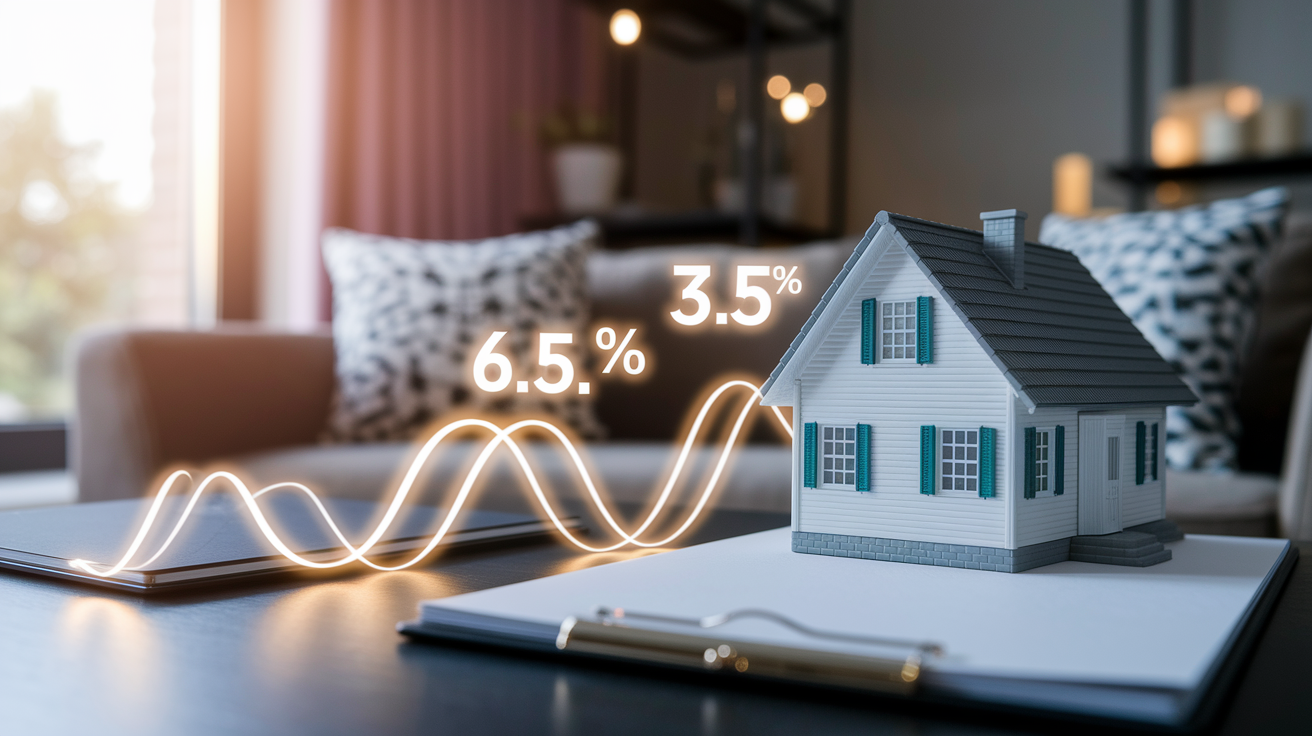
Mortgage rates track the 10-year Treasury yield more than the federal funds rate. When recession fears build, investors pile into Treasuries. That drives yields and mortgage rates down together. A typical recession can shave one to two percentage points off mortgage rates over six to twelve months, creating refinancing waves and boosting affordability for new buyers. Fixed-rate mortgages lock in that lower rate for the life of the loan. Adjustable-rate mortgages reprice at their next adjustment date, often delivering immediate payment relief.
Auto loans and personal loans usually follow the prime rate, which moves with the Fed. As the funds rate drops, auto captives and banks lower APRs on new car financing. Personal loan APRs can range from 6.7 percent to 35.99 percent depending on your credit profile. Recession rate cuts compress the lower end of that range. Loan amounts span $1,000 to $250,000, with terms from 12 to 120 months. Borrowers with strong credit grab the best deals. Lenders tighten underwriting standards during downturns, so marginal applicants face higher rates or outright denials even when benchmark rates fall.
Credit cards tied to prime rate will eventually reflect rate cuts, but issuers often delay reductions or shrink credit lines to offset perceived risk. If you carry a balance, a one-percentage-point drop in the funds rate might translate to a similar APR reduction over a few billing cycles. New credit-card offers sometimes include 0 percent balance-transfer promotions during recessions as issuers compete for high-quality borrowers. Approval criteria remain strict though.
Lenders raise credit standards across the board when defaults rise. Expect these shifts during the next recession:
Higher minimum credit scores for prime rates. FICO Score 8 thresholds often jump 20 to 40 points.
Tighter debt-to-income limits, with many lenders capping ratios at 36 percent or below.
Larger down payments required for mortgages and auto loans to reduce loan-to-value risk.
Reduced availability of stated-income or low-doc loan programs, forcing full documentation for most applicants.
Recession Interest Rates and Savings: APYs, CDs, Money Markets, and Deposit Rate Drops

When the Federal Reserve cuts the federal funds rate, banks slash annual percentage yields on deposit accounts almost immediately. High-yield savings accounts that paid 4.5 percent before a recession might drop to 2 percent or lower within months. Certificates of deposit lock in rates at purchase, so existing CD holders keep their contracted yield until maturity. New CDs reprice downward as issuers track market benchmarks. Money market accounts and funds follow the funds rate closely, often resetting APYs weekly or monthly.
Online banks typically offer higher APYs than brick-and-mortar institutions because they skip branch overhead. That advantage persists even during rate cuts. The gap between online and traditional bank deposit rates can widen in a recession. If you hold emergency cash or short-term reserves, shifting to an online savings account or a ladder of short-term CDs preserves as much yield as possible while maintaining liquidity. Money market mutual funds offer check-writing and same-day access, making them a flexible option when rates hover near zero and every basis point counts.
Refinancing Opportunities in Recessions and How to Evaluate Them

Refinancing can deliver real savings when recession interest rates fall below your existing loan rate. But the math only works if you stay in the loan long enough to recover closing costs. Mortgage refinancing typically costs 2 to 5 percent of the loan balance in fees. Appraisal, title, origination, lender charges. If those fees total $4,000 and your monthly payment drops by $200, you break even in 20 months. Stay shorter than that and you lose money. Stay longer and the savings compound.
Rate alone doesn’t dictate whether to refinance. Check for prepayment penalties on your current loan that could erase potential gains. Compare your remaining term to the new term. Refinancing a mortgage with 18 years left into a fresh 30-year loan lowers your payment but extends your debt and increases total interest paid. You can offset that by choosing a shorter new term or making extra principal payments. Refinancing federal student loans into private loans might unlock a lower rate, but you forfeit income-driven repayment, deferment, forbearance, and potential forgiveness. Those benefits matter during recessions when job loss spikes.
Before refinancing, run through this break-even checklist:
Calculate total closing costs in dollars, not percentages, to see the real cash outlay.
Divide closing costs by monthly payment reduction to find break-even months.
Confirm your credit score qualifies for the advertised rate. Recession underwriting is tighter.
Check prepayment penalties on your current loan and verify the new loan has none.
Weigh term extension against total interest paid over the loan’s life, especially if you plan to stay in the home or keep the loan long-term.
Lenders advertise aggressively during rate drops. The best deal depends on your timeline and financial stability, not the headline APR.
Historical Patterns: Comparing Past Recessions and Interest Rate Movements

The Great Recession lasted roughly 18 months, from December 2007 to June 2009. It triggered one of the most aggressive monetary responses in modern history. The Federal Reserve slashed the effective federal funds rate from over 5 percent in mid-2007 to near zero by the end of 2008. The 10-year Treasury yield, which had hovered near 5 percent before the crisis, plunged below 2 percent by late 2008 as investors fled equities for the safety of government bonds. Mortgage rates followed, dropping from around 6.5 percent to below 5 percent. That sparked multiple refinancing waves and stabilized housing demand as the market bottomed.
The 2020 pandemic recession was the shortest on record. Just two months. But it produced an equally dramatic rate response. The Fed cut the funds rate to near zero in March 2020 and launched unlimited quantitative easing to prevent a credit freeze. The 10-year Treasury yield fell below 1 percent for the first time ever, pulling mortgage rates into the low 3-percent range and eventually into the high 2-percent range by early 2021. That collapse in borrowing costs fueled a housing boom even as unemployment spiked above 14 percent. It shows how recession interest-rate policy can create pockets of strength amid broader weakness.
| Recession | Duration | Fed Funds Rate Movement | Treasury Yield Behavior |
|---|---|---|---|
| Great Recession (2007–2009) | 18 months | 5% to near 0% | 10-year yield dropped from ~5% to below 2% |
| COVID-19 Recession (2020) | 2 months | 1.5% to near 0% | 10-year yield fell below 1% for first time |
| Dot-com Recession (2001) | 8 months | 6.5% to 1.75% | 10-year yield declined from ~5.5% to ~4% |
| Early 1990s Recession (1990–1991) | 8 months | 8% to 3% | 10-year yield dropped from ~9% to ~6% |
Investment Strategies for Recession Interest Rate Environments

Bonds gain appeal during recessions because falling interest rates boost bond prices. When the Fed cuts, existing bonds with higher coupons become more valuable. You get capital gains on top of income. Short-term bonds carry less duration risk and reprice faster as rates fall, making them suitable if you want income without long-term interest-rate exposure. Intermediate and long-term bonds deliver larger price appreciation when yields collapse, but they also suffer steeper losses if the Fed pivots to rate hikes during recovery.
Bond laddering spreads maturities across multiple years. You reinvest principal at prevailing rates without locking all your capital into a single point on the yield curve. Treasury Inflation-Protected Securities (TIPS) hedge against stagflation, that rare scenario where recession meets rising prices, by adjusting principal for inflation. Real estate investment trusts (REITs) and direct real estate holdings offer low correlation with equities and can benefit from lower mortgage rates. Property-price volatility and liquidity constraints require careful position sizing though.
Defensive allocations during recession interest-rate environments typically include:
Short-duration investment-grade bonds to preserve capital and capture modest yield without long-term rate risk.
TIPS for inflation protection if supply shocks or fiscal stimulus threaten price stability.
High-quality municipal bonds for tax-advantaged income, especially if marginal tax rates rise.
REITs or real estate mutual funds for diversification and potential income, balanced against property-market cyclicality.
Cash and money market funds remain essential for liquidity, emergency reserves, and dry powder to buy risk assets when valuations bottom. Keep enough accessible cash to cover six to twelve months of expenses. Then allocate the rest across bonds, real estate, and selective equity positions based on your risk tolerance and time horizon.
Consumer Financial Planning When Facing Recession Interest Rate Changes

Lower recession interest rates reduce monthly debt-service costs for variable-rate borrowers and create refinancing opportunities for fixed-rate borrowers. They also signal economic stress. Job stability becomes the first planning priority. Before taking on new debt or refinancing, confirm your income stream is secure and build or maintain an emergency fund covering at least six months of essential expenses. Lenders tighten credit standards during downturns, so even advertised low rates might be unavailable if your debt-to-income ratio climbs or your credit score slips.
Debt consolidation can make sense when rates fall. Transferring high-interest credit-card balances to a 0 percent balance-transfer card, assuming you qualify and can pay off the balance before the promotional period ends, eliminates interest charges and accelerates paydown. Consolidating multiple loans into a single personal loan at a lower rate simplifies payments and can reduce total interest. Watch for origination fees that offset savings. Don’t extend loan terms solely to lower monthly payments if the total interest paid balloons. Run the full amortization to see the real cost.
Recession interest-rate drops also create windows to lock fixed rates before recovery begins and the Fed reverses course. If you hold an adjustable-rate mortgage or home equity line of credit, converting to a fixed-rate loan protects you from future rate hikes. If you’re considering a major purchase (home, car, education), timing it during the rate trough can save thousands over the loan’s life. Provided your income and credit remain strong enough to qualify under tighter underwriting. Balance the appeal of low rates against the risk of job loss, reduced hours, or unexpected expenses that recessions bring. Only borrow when the need is clear and your financial cushion is solid.
Final Words
Rates typically fall in a recession as demand softens and the Fed cuts — and that change touches mortgages, auto loans, credit cards, and savings yields.
This piece walked you through why cuts happen, which signals to watch (yield curve, GDP, unemployment), how different loans react, and when refinancing or defensive bond moves make sense. Watch fed funds, Treasury yields, mortgage spreads, and your refinance breakeven.
Keep those levels handy. With a clear plan you’ll navigate recession interest rates, protect cash, and spot opportunities. Stay steady and act on the setups that fit your risk.
FAQ
Q: What happens to interest rates and Fed interest rates in a recession?
A: Interest rates, including the Fed’s, usually fall in a recession as the Fed cuts the federal funds rate to stimulate demand; variable-rate loans adjust down faster than fixed-rate loans.
Q: Who benefits from a recession?
A: A recession benefits cash buyers and bargain hunters who buy discounted assets, borrowers able to refinance at lower rates, defensive sectors like utilities and staples, and bond investors seeking safety.
Q: Will mortgage rates drop to 3% again?
A: Mortgage rates will drop to 3% again only if long-term Treasury yields fall substantially and the Fed eases into near-zero policy; watch the 10-year Treasury and Fed guidance for signs.