Could a housing bubble and sloppy lending nearly topple the global financial system?
From December 2007 to June 2009 real GDP fell more than 4 percent and unemployment spiked to about 10 percent, wiping out trillions in savings and costing millions of jobs.
We’ll walk through what triggered the Great Recession, the key events that turned a housing slump into a full-blown crisis, the costs to jobs and wealth, and the signs investors and policymakers should watch if trouble starts again.
Comprehensive Overview of the Great Recession Crisis

The Great Recession kicked off in December 2007 and didn’t officially end until June 2009. Eighteen months. That’s the longest downturn the U.S. had seen since the Great Depression of the 1930s. Real GDP dropped more than 4 percent during that stretch, and pretty much every corner of the economy got hit. What started as a meltdown in housing and credit spread fast into manufacturing, services, retail, even the public sector. Millions of families lost their homes to foreclosure. Trillions in retirement savings just vanished. The Federal Reserve and the federal government had to step in with emergency measures nobody had tried on that scale in decades, all to stop the financial system from collapsing entirely.
The job market took brutal damage. Employers cut payrolls month after month. More than 8.7 million jobs disappeared between late 2007 and early 2010, and unemployment peaked at 10 percent in October 2009. Companies froze hiring, slashed hours, cut benefits. Consumers pulled back hard as home values and stock portfolios cratered. Consumer confidence fell to record lows while families watched their biggest assets evaporate and credit lines dry up. The speed of it all caught businesses, households, and forecasters off guard. Policymakers scrambled to deploy tools that hadn’t been tested since the 1930s.
Some key numbers that define the Great Recession:
- GDP contracted more than 4 percent over 18 months.
- Unemployment hit 10 percent in October 2009.
- More than 8.7 million jobs vanished before payrolls stabilized.
- Over 3.8 million foreclosure filings from 2007 through 2010.
- The S&P 500 dropped roughly 57 percent from its October 2007 peak to the March 2009 low.
Origins of the Great Recession and the Housing Market Crash

A housing bubble built on speculative lending set the whole thing in motion. Through the early 2000s, home prices climbed year after year as lenders relaxed standards and handed out loans to borrowers with weak credit, sketchy income documentation, and almost no down payment. Predatory lending became common. Millions took on adjustable-rate mortgages with low teaser rates that were set to reset to much higher payments after a couple years. Regulators didn’t step in. Nonbank lenders issued billions in risky loans without enough capital or consumer protections. When housing prices peaked around 2006 and 2007, buyers stopped bidding homes up. The bubble popped. Millions of borrowers ended up with mortgages bigger than what their homes were worth, and refinancing wasn’t an option.
Wall Street made it worse through securitization. Lenders bundled subprime and other risky mortgages into mortgage-backed securities and collateralized debt obligations, sliced them into tranches, and got credit-rating agencies to stamp AAA ratings on them even though the underlying loans were fragile. Investors worldwide bought these securities, thinking they were safe. When delinquencies and defaults surged, the value collapsed. Massive losses hit banks, insurance companies, pension funds, investment portfolios. The shadow banking system, which ran on short-term wholesale funding instead of traditional deposits, experienced runs. Lenders refused to roll over overnight loans, scared of counterparty insolvency. Global finance was so interconnected that a U.S. housing problem turned into a worldwide crisis in months.
Six things broke down and fueled the crash:
- Explosive growth in subprime lending to people who couldn’t really afford to repay.
- Teaser-rate adjustable mortgages that reset to unaffordable levels.
- Rating agencies handing out inflated credit ratings to securitized mortgage products.
- Securitization volume hitting trillions, spreading toxic assets across the system.
- Banks and investment firms using massive leverage that magnified losses when asset values dropped.
- A sharp reversal in housing prices that left millions underwater, unable to sell or refinance.
Great Recession Timeline and Key Events (2006–2009)
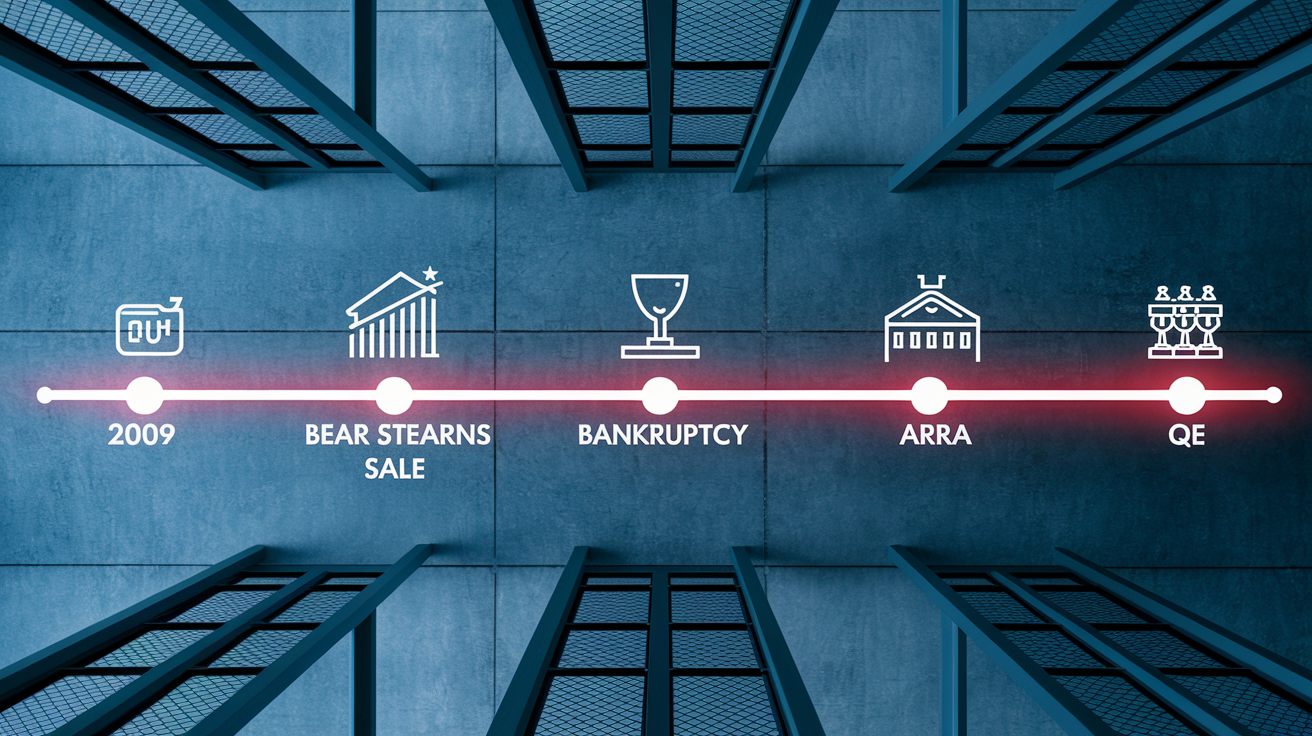
Warning signs showed up as early as 2006. Housing prices started to flatten, and delinquency rates on subprime mortgages ticked up. By August 2007, liquidity stress emerged in interbank lending markets. Banks got uncertain about each other’s exposure to mortgage-backed securities. Credit spreads widened, and several mortgage lenders went bankrupt or shut down. The Federal Reserve started cutting rates to ease funding pressures, but investor confidence kept deteriorating through the end of 2007 and into early 2008. Most economists figured a recession had probably started, though the official call wouldn’t come until later. Housing starts fell off a cliff. Home sales slowed. Construction employment dropped while foreclosure filings accelerated across states that had seen the biggest price run-ups during the boom.
Things escalated hard in 2008. In March, the Fed helped arrange an emergency sale of Bear Stearns to prevent a messy collapse. On September 7, the government placed Fannie Mae and Freddie Mac into conservatorship to stabilize the mortgage market. One week later, September 15, Lehman Brothers filed for bankruptcy when no buyer or government rescue materialized. Global panic. The next day, September 16, the Fed extended an emergency loan of about 85 billion dollars to AIG to keep the insurance giant from failing and taking counterparties down with it. Credit markets froze. Banks stopped lending to each other and to businesses. Stock indices swung wildly, with daily moves bigger than anything since the Great Depression. Commercial paper markets dried up, money-market funds faced redemption runs, and even healthy companies couldn’t roll over short-term debt.
Policy intervention ramped up fast in late 2008 and early 2009 to stabilize the system and stop the freefall. On October 3, 2008, Congress authorized the Troubled Asset Relief Program, committing up to 700 billion dollars to purchase or insure distressed assets and inject capital into banks. On December 16, 2008, the Fed cut its target rate to a range of 0 to 0.25 percent, effectively zero. On February 17, 2009, President Obama signed the American Recovery and Reinvestment Act, a fiscal stimulus package totaling about 787 billion dollars in tax cuts, infrastructure spending, safety-net support, and aid to state governments. The combination of monetary and fiscal firepower helped arrest the panic. By June 2009, the National Bureau of Economic Research later determined the recession had hit its trough, marking the official end even though recovery would be slow and uneven.
| Date | Event | Impact on Crisis |
|---|---|---|
| August 2007 | Interbank liquidity stress emerged | Banks began hoarding cash; credit spreads widened sharply |
| March 2008 | Bear Stearns emergency sale | First major investment bank rescue; signaled systemic fragility |
| September 15, 2008 | Lehman Brothers bankruptcy | Triggered global panic; credit markets froze worldwide |
| October 3, 2008 | TARP authorized (~$700B) | Provided capital injections to stabilize banks; restored some confidence |
| February 17, 2009 | ARRA stimulus signed (~$787B) | Boosted aggregate demand; funded infrastructure and safety net |
Economic Impacts of the Great Recession on Jobs, Housing, and Wealth

The labor market got crushed as businesses slashed payrolls across every sector. Over 8.7 million jobs vanished between December 2007 and early 2010, wiping out nearly all the gains from the previous expansion. Unemployment surged from under 5 percent in early 2008 to 10 percent by October 2009. Millions exhausted unemployment benefits while hunting for new work. Long-term unemployment, defined as 27 weeks or more out of work, hit levels not seen since the 1930s. The share of workers facing prolonged joblessness stayed elevated for years after the recession officially ended. Men, younger workers, and those without college degrees took disproportionately severe hits, especially in construction, manufacturing, and retail. Discouraged workers dropped out of the labor force entirely, pushing participation rates down and masking the true depth of joblessness in official stats.
Housing losses and the foreclosure wave wrecked household balance sheets and neighborhood stability. More than 3.8 million foreclosures were filed from 2007 through 2010 as borrowers defaulted on mortgages they couldn’t afford or walked away from properties worth less than what they owed. National home prices fell nearly 30 percent in many markets, wiping out equity families had counted on for retirement and college savings. Entire neighborhoods saw clusters of vacant, bank-owned homes that pushed property values down further and increased crime and blight. Homeownership rates dropped as millions lost homes and tighter lending standards made it harder for new buyers to qualify. The collapse in home prices destroyed a key pillar of consumer wealth since housing equity had been the biggest single asset for most middle-class households. Negative equity trapped families in place, unable to sell and relocate for better jobs.
Wealth destruction went beyond housing into retirement accounts, stock portfolios, and overall net worth. Median household net worth fell roughly 29 percent between 2007 and 2010, dropping from around 135,700 dollars to 82,300 dollars. The S&P 500 lost about 57 percent of its value from the October 2007 peak to the March 2009 trough, erasing nearly 2 trillion dollars in retirement savings held in 401(k) plans and IRAs. Older workers approaching retirement saw their nest eggs cut in half, forcing many to delay retirement or go back to work. Consumer spending, which accounts for about two-thirds of U.S. economic activity, contracted sharply as households cut discretionary purchases, paid down debt, and rebuilt emergency savings. Job losses, housing declines, and stock crashes created a negative wealth effect that depressed consumption and prolonged the downturn well past the official end.
Financial System Failures and the Wall Street Meltdown

The financial system’s collapse came from extreme leverage, opaque derivative contracts, and reliance on short-term funding that evaporated when confidence broke. Major investment banks ran leverage ratios over 30 to 1, meaning a small drop in asset values could wipe out their entire equity cushion. When mortgage-backed securities and collateralized debt obligations lost value, those thin capital buffers proved worthless, and institutions faced insolvency. Credit-rating agencies had slapped AAA ratings on securities filled with subprime loans, misleading investors about the real risk. Once defaults mounted and rating downgrades cascaded, the market for those toxic assets vanished. Banks held billions in assets they couldn’t sell or value accurately. Mark-to-market accounting forced them to write down the value, depleting capital and triggering margin calls on derivative positions.
The shadow banking system, made up of investment banks, money-market funds, hedge funds, and structured investment vehicles, experienced runs like the bank runs of the 1930s. These institutions relied on overnight repos and commercial paper to fund long-term asset holdings, a setup that worked only as long as lenders stayed confident. When Lehman Brothers filed for bankruptcy on September 15, 2008, lenders panicked and refused to roll over short-term funding to any counterparty that looked risky. Money-market funds, which investors had always treated as safe as bank deposits, “broke the buck” when one prominent fund’s net asset value fell below a dollar per share because of Lehman exposure. Redemption requests flooded money-market funds. The Treasury had to guarantee balances to prevent a wholesale collapse. Liquidity dried up across credit markets, and even creditworthy corporations struggled to issue commercial paper or get working-capital loans, threatening a complete freeze of the real economy.
The Federal Deposit Insurance Corporation documented about 465 bank failures from 2008 through 2012, the highest wave of closures since the savings-and-loan crisis of the late 1980s and early 1990s. Regional and community banks with heavy exposure to commercial real estate and construction loans faced mounting losses as property values declined and developers defaulted. The FDIC stepped in to close insolvent institutions on Friday afternoons and arrange sales to healthier banks over the weekend, a process that protected depositors but imposed losses on unsecured creditors and shareholders. Stock markets swung wildly as investors cycled between hope that government interventions would work and fear that another major institution would collapse. The S&P 500’s roughly 57 percent decline from peak to trough reflected the market’s view that corporate earnings would crater and the financial system itself might not survive without massive public support.
Government Intervention During the Great Recession

Congress authorized the Troubled Asset Relief Program on October 3, 2008, initially planning to buy distressed mortgage-backed securities off bank balance sheets. Within weeks, officials shifted strategy and used TARP funds to inject equity capital directly into banks, purchasing preferred shares and warrants to stabilize institutions and encourage lending. The U.S. Treasury eventually deployed hundreds of billions in TARP dollars into major banks, regional lenders, insurance companies, and auto manufacturers. Public outrage over “bailing out Wall Street” was intense, but policymakers argued that letting banks fail in a cascade would deepen the recession and destroy millions more jobs. TARP’s ultimate cost to taxpayers turned out far lower than the 700 billion authorization because many institutions repaid the government with interest and the Treasury sold warrants at a profit as markets recovered.
The American Recovery and Reinvestment Act, signed February 17, 2009, was the biggest fiscal stimulus in U.S. history up to that point. The roughly 787 billion dollar package combined tax cuts for individuals and businesses, funding for infrastructure projects like roads and broadband, extensions of unemployment benefits, aid to state governments facing budget shortfalls, and investments in education and clean energy. The stimulus aimed to boost aggregate demand at a moment when private-sector spending was collapsing and businesses were hoarding cash. Economists remain divided over how effective it was. Some studies suggest it saved or created millions of jobs, others argue the impact was smaller than projected. Either way, ARRA injected substantial purchasing power into the economy when monetary policy alone was constrained by the zero lower bound on rates.
The Federal Reserve deployed both conventional and unconventional tools. After cutting the federal funds rate target to 0 to 0.25 percent in December 2008, the Fed turned to large-scale asset purchases, commonly called quantitative easing. The central bank bought Treasury securities and mortgage-backed securities guaranteed by Fannie Mae and Freddie Mac, expanding its balance sheet from under 1 trillion before the crisis to more than 2 trillion by late 2009. These purchases aimed to lower long-term interest rates, support mortgage refinancing, and inject liquidity into frozen credit markets. The Fed also set up emergency lending facilities to provide short-term funding to banks, primary dealers, money-market funds, and even commercial-paper issuers, acting as a lender of last resort across a much broader range of institutions than in any previous crisis. Forward guidance, where the Fed communicated its plan to keep rates low for an extended period, helped anchor expectations and encourage borrowing and investment.
Four programs proved particularly crucial in stabilizing the economy and financial system:
- The Troubled Asset Relief Program (TARP), which injected capital into banks and supported auto manufacturers with about 700 billion in authorized funding.
- The American Recovery and Reinvestment Act (ARRA), which delivered roughly 787 billion in fiscal stimulus through tax cuts, infrastructure spending, and safety-net expansion.
- Emergency Federal Reserve lending facilities that provided liquidity to banks, broker-dealers, money-market funds, and commercial-paper markets when private funding evaporated.
- Quantitative easing (QE), through which the Fed purchased long-term Treasury and mortgage-backed securities to lower interest rates and support credit availability.
Global Consequences of the Great Recession
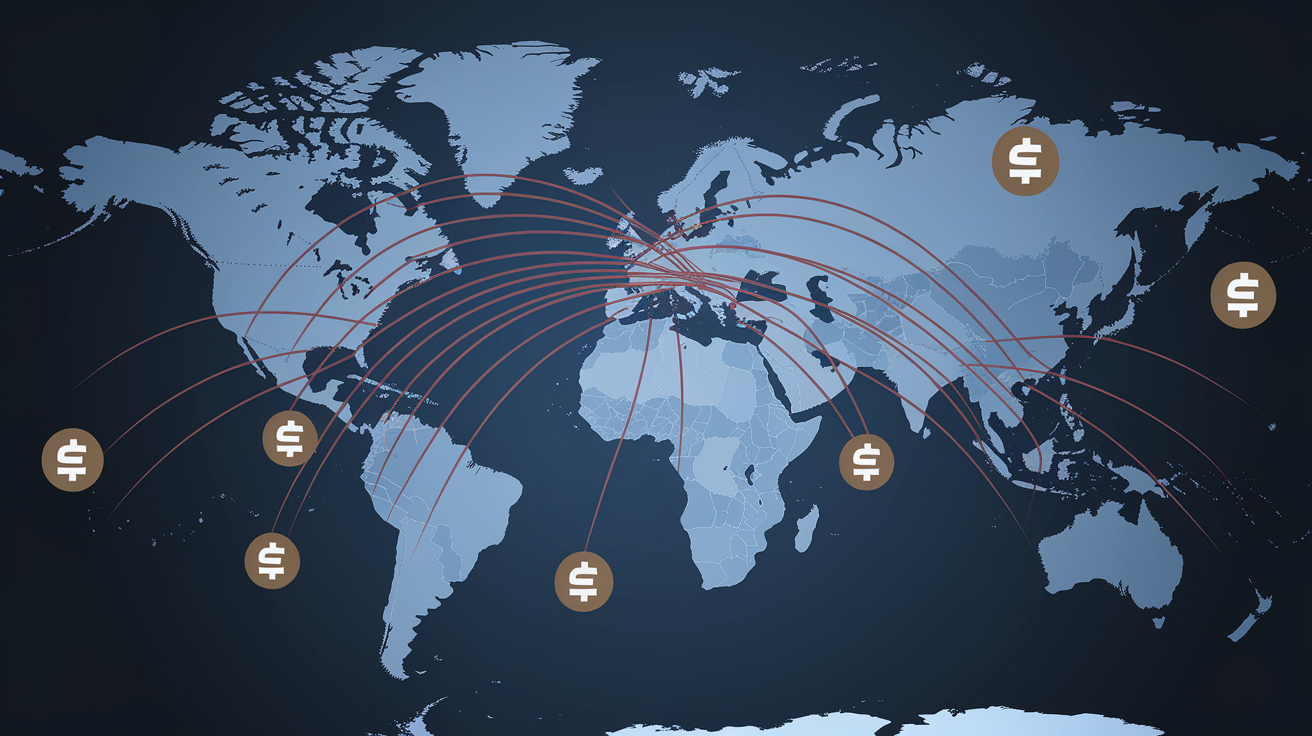
The Great Recession spread fast across borders through trade channels, financial linkages, and confidence shocks. European banks had invested heavily in U.S. mortgage-backed securities and structured products, so when those assets collapsed, institutions in the U.K., Germany, Ireland, Spain, and other countries needed emergency government support and capital injections. Several European governments nationalized or part-nationalized major banks to prevent systemic failures. The crisis also exposed cracks in the eurozone, where countries sharing a currency lacked independent monetary policy tools. Greece, Ireland, Portugal, Spain, and Italy faced sovereign-debt crises as investors grew skeptical of their ability to service public obligations amid plunging tax revenues and rising social spending. The IMF and European authorities eventually assembled rescue packages, but the sovereign-debt turmoil extended the global downturn and created years of austerity and political instability across southern Europe.
Emerging-market economies got hit with sharp slowdowns as global demand for exports collapsed and capital flows reversed. World trade volumes fell about 12 percent in 2009, the steepest drop since World War II. Consumers and businesses in advanced economies cut spending and inventories piled up. Export-dependent nations in Asia, Latin America, and Eastern Europe saw manufacturing output plunge and unemployment rise. Currency pressures intensified as investors pulled money out of emerging markets and sought safety in U.S. Treasuries and other haven assets. Several countries turned to the IMF for emergency financing to stabilize their balance of payments and support their banking systems. Commodity prices tumbled as global demand weakened, hitting oil producers and agricultural exporters hard and reducing government revenues in resource-rich economies.
Global financial contagion, sovereign debt crises, the sharpest contraction in world trade since the 1930s, and coordinated policy responses defined the international dimension:
- European banks needed massive bailouts after taking losses on U.S. mortgage securities and domestic real-estate bubbles.
- The eurozone faced sovereign-debt crises in Greece, Ireland, Portugal, Spain, and Italy that threatened the survival of the common currency.
- Emerging markets saw export volumes collapse, capital flight, and currency depreciation as global demand evaporated.
- The G20 coordinated fiscal stimulus, and central banks worldwide cut rates and launched asset-purchase programs to cushion the downturn.
Comparing the Great Recession to Other U.S. Recessions
The Great Recession was the worst economic contraction the U.S. had seen since the Great Depression. Real GDP fell roughly 4 to 4.5 percent from peak to trough during the Great Recession, whereas the Great Depression saw GDP plunge an estimated 25 to 30 percent between 1929 and 1933. Unemployment during the Great Recession peaked at 10 percent in October 2009, far below the roughly 25 percent jobless rate recorded at the depths of the Depression. The difference in outcomes reflects the aggressive fiscal and monetary policy responses deployed in 2008 and 2009: massive bank bailouts, fiscal stimulus, near-zero rates, and quantitative easing, none of which were available or attempted in the early 1930s. The existence of automatic stabilizers like unemployment insurance and Social Security also cushioned household income and prevented the kind of deflationary spiral that worsened the Depression.
Earlier post-World War II recessions were generally shorter and less damaging. The 1973 to 1975 recession, triggered by oil shocks and stagflation, saw unemployment rise to about 9 percent by May 1975 and inflation hit over 12 percent in 1974, but the downturn lasted 16 months and didn’t involve systemic financial-sector failures. The early 1980s recession, caused by the Fed’s aggressive rate hikes to break persistent inflation, pushed unemployment to a peak of roughly 10.8 percent in December 1982 and drove mortgage rates to around 18 percent, yet that recession also stemmed from deliberate monetary tightening rather than a financial crisis. The early 2000s dot-com recession was relatively mild. The NASDAQ fell more than 70 percent but the broader economy saw only a shallow, eight-month contraction and peak unemployment near 6 percent. None of those downturns matched the Great Recession in household wealth destruction, foreclosure volumes, bank failures, or the need for emergency government intervention on the scale of TARP and ARRA.
The Great Recession’s length, depth, and extent of financial-system damage set it apart. The 18-month duration tied it as one of the longest recessions in the post-war period, and the recovery that followed was slower and more painful than after earlier downturns. The combination of a housing crash, a credit freeze, and global contagion created a feedback loop that previous recessions hadn’t exhibited. Policy responses prevented a repeat of the 1930s catastrophe, but the scars from 2007 to 2009 reshaped how economists, regulators, and the public think about financial stability and the role of government intervention during crises.
Long-Term Effects and Recovery After the Great Recession

The official end of the recession in June 2009 marked only the start of a prolonged and uneven recovery. Employment growth stayed sluggish for years. It took until 2014 for unemployment to fall back near pre-crisis levels. Many workers who lost jobs during the recession faced long spells of unemployment, and when they did find new positions, wages often came in lower. Labor-force participation rates declined, especially among prime-age workers, as discouraged individuals gave up searching or retired early. Underemployment became widespread. College graduates took jobs that didn’t require a degree. Experienced professionals accepted part-time or temporary roles. The slow pace of job creation fed frustration and contributed to political polarization, with debates over austerity, government spending, and income inequality dominating policy discussions for the next decade.
Household deleveraging reshaped consumer behavior and slowed recovery. Families that had piled up high levels of mortgage and credit-card debt before the crisis focused on paying down balances rather than spending, a rational response to the wealth losses they’d suffered but one that dampened aggregate demand. Homeownership rates fell as millions lost homes to foreclosure and tighter lending standards made it harder for first-time buyers to qualify. Younger cohorts, burdened by student debt and scarred by the recession’s job-market damage, delayed major purchases like homes and cars. Wealth inequality widened because asset owners who held diversified portfolios and stayed employed saw their stock holdings recover and eventually hit new highs, while those who sold at the bottom or lost homes never regained their previous net worth. Public debt as a share of GDP rose sharply as stimulus spending and automatic-stabilizer outlays increased federal borrowing, setting the stage for long-running debates over fiscal sustainability and the appropriate size of government.
Persistent long-term effects included:
- Labor-market scarring, with elevated long-term unemployment and reduced labor-force participation among certain demographics lasting well into the 2010s.
- Household deleveraging that suppressed consumer spending growth and slowed the recovery’s pace.
- Rising wealth inequality as asset prices recovered unevenly and homeownership rates declined.
- A substantial increase in public debt relative to GDP, driven by crisis-related spending and lower tax revenues.
- Shifts in risk tolerance and retirement planning, with households holding larger cash reserves and favoring safer investments.
Lessons Learned From the Great Recession

Households that kept diversified portfolios and continued regular retirement contributions during the downturn recovered faster than those who panicked and sold at market lows. Investors who stayed the course, or even increased their equity allocations when stock prices were depressed, benefited from the bull market that began in March 2009 and ran for more than a decade. Trying to time the market by selling after losses had already happened locked in permanent damage, while dollar-cost averaging, buying at regular intervals regardless of market conditions, let disciplined savers purchase shares at bargain prices. The experience reinforced the principle that long-term investing requires the emotional fortitude to ride out severe downturns and the discipline to stick with an asset-allocation plan even when headlines are grim.
Emergency savings proved critical for families navigating job losses and income shocks. Surveys conducted in the years after the recession revealed that nearly 40 to 42 percent of Americans couldn’t cover a 1,000 dollar emergency expense from savings, a vulnerability that left millions at risk when the next downturn arrived. Financial advisors consistently recommend keeping three to six months of essential expenses in a liquid, accessible account, yet the Great Recession showed that many households entered the crisis without that cushion. Those who had cash reserves were better positioned to avoid foreclosure, cover medical bills, or weather unemployment without resorting to high-interest debt. The lesson that emergency funds matter became a central theme in post-crisis financial education and retirement planning.
Regulators and policymakers saw that light-touch oversight and reliance on market discipline had failed to prevent the crisis. The Dodd-Frank Wall Street Reform and Consumer Protection Act, signed into law July 21, 2010, introduced stronger capital and liquidity requirements for large banks, created a framework for resolving systemically important institutions without taxpayer bailouts, established the Consumer Financial Protection Bureau to guard against predatory lending, and imposed new transparency and reporting rules on derivatives markets. Internationally, the Basel III framework raised capital standards and introduced liquidity-coverage and net-stable-funding ratios to reduce the risk of bank runs. The reforms aimed to make the financial system more resilient and reduce the likelihood that taxpayers would again be forced to rescue failing institutions. Debate continues over whether the regulations struck the right balance between safety and growth, but the consensus that some reform was necessary marked a clear break from the pre-crisis regulatory philosophy.
| Lesson | Explanation |
|---|---|
| Diversification and long-term discipline | Households that maintained balanced portfolios and continued investing during the downturn recovered wealth faster than those who sold at market lows. |
| Emergency savings are essential | Three to six months of liquid reserves helped families avoid foreclosure and high-interest debt during job losses; many Americans entered the crisis without this buffer. |
| Avoiding market timing | Selling after losses locked in permanent damage; dollar-cost averaging and staying invested allowed savers to benefit from the eventual recovery. |
| Stronger financial regulation | Dodd-Frank and Basel III raised capital standards, improved transparency, and created resolution frameworks to reduce systemic risk and limit taxpayer exposure in future crises. |
Final Words
The economy plunged from December 2007 to June 2009: real GDP fell about 4 percent, unemployment spiked near 10 percent, and millions of jobs and homes were lost.
Markets froze as Lehman and AIG blew past warning signs, and policymakers stepped in with TARP, stimulus, rate cuts, and QE to stop the slide.
Takeaway: watch housing and credit signals, keep emergency savings, diversify, and set clear risk levels. The great recession was a hard lesson, but it left practical rules that helped recovery take hold.
FAQ
Q: What happened during the Great Recession?
A: The Great Recession was an 18-month downturn from December 2007 to June 2009, with U.S. real GDP falling over 4 percent, unemployment surging, 8.7 million jobs lost, and millions of foreclosures.
Q: What to stockpile in a recession?
A: In a recession, stockpile an emergency fund (3–6 months of expenses), cash, nonperishable food, necessary medications, basic household supplies, important documents, and skills or alternate income while cutting discretionary spending.
Q: How did Obama deal with the Great Recession?
A: Obama responded by signing the 2009 ARRA stimulus (~$787 billion), supporting bank and auto stabilizations, extending unemployment benefits, and pushing Dodd-Frank financial reforms to restore credit and stabilize markets.
Q: Which three factors led to the Great Recession in 2008?
A: The three main factors were a U.S. housing bubble driven by subprime lending, widespread securitization with faulty ratings on mortgage securities, and extreme leverage that caused a liquidity and credit freeze.