
What if a single FDA memo can make a tiny biotech worth billions or wipe it out overnight?
The FDA’s yes-or-no decisions are the biggest catalyst in drug stocks, forcing instant revaluations and extreme swings.
This post explains why PDUFA dates (FDA decision deadlines), advisory committee votes, and late-stage readouts move prices so hard, and how options and volume amplify the effect.
You’ll get a simple plan: the dates to mark, the levels that confirm a move, and the price action that makes you step back.
Why FDA Approval Events Act as Major Stock Catalysts

The U.S. Food and Drug Administration holds the keys to every new drug’s commercial future. When the FDA grants approval, a biotech company’s experimental therapy transforms into a revenue-generating product overnight. When it rejects an application, years of research and hundreds of millions in development costs evaporate. This binary yes or no dynamic makes FDA decisions arguably the most powerful catalyst in all of equity markets.
FDA approval events can move market capitalizations by tens of billions of dollars in a single trading session, according to IQVIA’s market impact studies. Small cap biotech stocks react with extraordinary force, sometimes two orders of magnitude larger than comparable moves in diversified large cap pharma. Historical examples underscore the scale: iCo Therapeutics saw shares climb 33 percent after announcing the start of a Phase 1 study for Oral Amphotericin B, while Sage Therapeutics surged as much as 85 percent to a record high following stellar Phase 2 results in major depressive disorder. PDUFA dates, the FDA’s target decision deadlines, concentrate risk and attention, frequently triggering extreme volatility in the days and hours around the announcement.
Small cap biotechs experience amplified swings because a single asset often represents the majority of enterprise value. A failed trial or rejected NDA can leave the company with little more than cash on the balance sheet and a burned out pipeline. Large cap pharma portfolios absorb individual setbacks more easily, spreading regulatory risk across dozens of programs. That asymmetry makes small and mid cap biotech the most attractive and most dangerous hunting ground for catalyst driven traders.
Five Core Reasons FDA Approvals Move Stocks:
Binary outcomes force immediate revaluation. Approval or rejection leaves no middle ground, forcing an immediate revaluation of the asset’s net present value.
Revenue expectations shift. A successful NDA or BLA unlocks years of projected cash flows, shifting the company from speculative to commercial stage.
Derisking supports higher multiples. Each positive milestone, from preclinical to Phase 3 to approval, removes a layer of uncertainty and supports higher multiples.
Options and implied volatility shifts create explosive moves. Traders pile into call and put positions ahead of announcements, driving up premiums and creating explosive post event moves when IV collapses.
Liquidity surges accelerate price discovery. FDA decisions draw institutional attention and retail momentum, multiplying trading volume and accelerating price discovery in both directions.
FDA Catalyst Mechanics: How the Drug Approval Timeline Drives Stock Movements

The FDA drug approval pathway follows a well worn sequence: preclinical animal studies, investigational new drug application (IND) submission, Phase 1 safety trials in healthy volunteers or small patient cohorts, Phase 2a dose finding and Phase 2b randomized efficacy studies, large scale Phase 3 pivotal trials, and finally an NDA or biologics license application (BLA) that triggers formal FDA review. Each stage carries distinct technical risk and generates a corresponding market reaction when results land. Investors monitor this timeline closely because every milestone either confirms the thesis or resets valuation to zero.
Phase 2b and Phase 3 readouts deliver the largest stock catalysts. These studies provide statistically significant evidence of efficacy against placebo or standard of care, typically measured by endpoints such as overall survival, progression free survival, or functional improvement scales. When a late stage trial hits its primary endpoint with p values below 0.05 and hazard ratios clearly favoring the experimental arm, the market reprices the asset to reflect commercial probability. Conversely, a miss on the primary endpoint can wipe out 50 to 80 percent of market cap in minutes, especially if the program was the company’s lead asset. Preclinical announcements and Phase 1 completions usually produce smaller bumps, derisking the science but not yet proving the drug works at scale.
NDA and BLA submissions mark the start of the regulatory countdown. Once filed, the FDA assigns a PDUFA date, giving the agency six to ten months (standard or priority review) to decide. Submission alone can lift shares modestly because it signals the company believes it has a complete data package. But the real fireworks happen on PDUFA day or around an advisory committee (AdCom) meeting if one is scheduled. AdCom votes are non binding, yet an overwhelmingly positive panel recommendation often foreshadows approval and drives a pre PDUFA rally.
Investors interpret each milestone through three lenses: timing, statistical power, and commercial fit. A trial that meets its enrollment target ahead of schedule and reports top line results early suggests strong efficacy signals. Data that clear not only the primary endpoint but also key secondary measures (response rate, duration of response, safety profile) command premium valuations. Conversely, delays, missed endpoints, or unexpected safety flags erode confidence and prompt derisking selloffs well before any formal FDA action.
| Stage | Typical Investor Reaction | Expected Volatility | Example Outcome |
|---|---|---|---|
| Preclinical / Phase 1 | Modest de-risking bump | Low to moderate | iCo +33% on Phase 1 start |
| Phase 2b / Phase 3 | Large revaluation on efficacy data | Very high | Sage +85% on Phase 2 success |
| NDA / BLA submission | Incremental rally, sets PDUFA clock | Moderate | Establishes regulatory timeline |
| PDUFA decision | Binary approval or rejection | Extreme | Multi-billion market-cap swings |
Tracking FDA Catalyst Dates: PDUFA Windows, AdCom Votes, and Key Milestones

PDUFA dates are the single most important deadline in a biotech’s regulatory calendar. Set under the Prescription Drug User Fee Act, the PDUFA date is the FDA’s target day to complete its review and issue an approval decision or a complete response letter. Because the outcome is binary and high stakes, these dates concentrate investor attention and trading volume, often producing the year’s largest single day moves for small and mid cap names. Companies disclose PDUFA dates in press releases and SEC filings once the FDA assigns them, and investors mark calendars months in advance to position ahead of the event.
Advisory committee meetings add another layer of catalyst risk. AdCom panels, made up of independent clinical and scientific experts, vote publicly on whether the data support approval and what conditions or warnings might be warranted. Though advisory votes are non binding, the FDA follows committee recommendations the vast majority of the time. A unanimously positive AdCom vote, such as GW Pharmaceuticals’ panel ahead of its June 27, 2017 PDUFA date for a CBD based seizure therapy, can trigger a pre approval rally and compress implied volatility into the formal decision. A split or negative vote, on the other hand, often sinks the stock immediately and resets approval odds to near zero.
Accelerated pathways like breakthrough therapy designation, priority review, and accelerated approval shorten review timelines and signal that the FDA views the drug as addressing an unmet need. Breakthrough designation can cut development time by allowing smaller or interim data packages, while priority review reduces the PDUFA clock from ten months to six. These flags don’t guarantee approval, but they do concentrate event risk into tighter windows and elevate the perceived likelihood of a positive outcome. Investors treat these designations as positive technical catalysts in their own right, often bidding up shares on the news and adjusting probability weighted models upward.
Six Steps to Compile Your FDA Catalyst Calendar:
Visit the FDA’s Drugs@FDA database to search approved drugs and pending applications, filtering by therapeutic area and submission type.
Monitor clinicaltrials.gov for trial status updates, completion dates, and primary endpoint announcements that signal upcoming readouts.
Track Form 8-K filings on EDGAR for material clinical and regulatory disclosures, including NDA acceptances and PDUFA date assignments.
Review company press releases and investor presentations, where management telegraphs expected milestones and regulatory timelines.
Subscribe to biotech event calendars offered by specialized research platforms that aggregate PDUFA dates, AdCom schedules, and major readout windows.
Cross reference FDA advisory committee announcements posted on the agency’s public meeting calendar, noting vote dates that precede PDUFA decisions.
Modeling FDA Approval Probabilities and Expected Stock Moves

Quantifying the likelihood of FDA approval before the decision date allows investors to size positions rationally and estimate asymmetric payoffs. Machine learning models, particularly ensemble methods like RandomForest classifiers, can ingest historical clinical trial data (Phase outcomes, endpoint types, indication success rates, sponsor track records) and output approval probabilities for new submissions. A typical pandas based pipeline collects trial metadata from clinicaltrials.gov and SEC filings, engineers features such as trial size and statistical power, trains a classifier on completed programs, and applies the model to pending applications. Industry reports note that automated data processing and feature engineering can reduce manual analysis time by up to 50 percent, freeing analysts to focus on interpretation and trade construction.
Beyond binary approval odds, investors also model the expected magnitude of stock moves by analyzing historical post approval and post rejection returns. For each comparable indication and market cap segment, calculate one day, seven day, and thirty day percentage changes following PDUFA announcements. Aggregate these distributions to estimate the stock’s potential upside if approved and downside if rejected, then weight each scenario by the modeled approval probability. This probability adjusted expected return, combined with the current share price, gives a fair value target and highlights whether the market has already priced in success or remains skeptical.
Statistical significance thresholds and trial design details matter as much as top line probability numbers. A Phase 3 trial that misses its primary endpoint but shows strong trends in secondary measures may still support a resubmission or conditional approval pathway, limiting downside. Conversely, a trial that hits its primary endpoint with marginal p values and narrow confidence intervals may face greater commercial skepticism, capping upside despite technical approval. Interim data readouts, especially in oncology and rare disease programs, offer early signals that shift probability estimates and allow traders to reposition before final results.
Implied volatility (IV) levels in the options market provide a real time gauge of expected stock movement. By comparing current IV to historical volatility and the stock’s realized moves around past catalysts, traders can assess whether options are cheap or expensive relative to the likely outcome. When IV spikes ahead of a PDUFA date, option premiums expand, making straddles and strangles costlier but also signaling that the market expects a large absolute move. After the announcement, IV typically collapses, a phenomenon known as IV crush, which can turn profitable directional bets into losers if the move doesn’t exceed the premium paid.
Core Data Inputs
Building a robust approval probability model requires six core data inputs. First, identify the trial phase and study design. Randomized, double blind, placebo controlled trials carry more weight than single arm studies. Second, capture the endpoint type: overall survival and progression free survival in oncology, functional scales in neurology, or virologic suppression in infectious disease. Third, record enrollment size and completion forecasts, since larger trials reduce statistical noise and improve confidence in outcomes. Fourth, assess the company’s cash runway, with 12 to 18 months of operating capital recommended to avoid financing dilution risk during the review period. Fifth, pull historical reaction data for the same indication and sponsor, calculating median and interquartile ranges of post catalyst moves. Sixth, monitor implied volatility levels in the options chain to understand market expectations and identify mispricings in strike selection. Together, these inputs feed a structured DataFrame that can be queried, modeled, and updated as new disclosures arrive.
Trading FDA Approval Catalysts: Equity and Options Playbooks

Event driven equity strategies around FDA catalysts range from simple long or short bets to more nuanced scaling approaches. A straightforward long position ahead of a PDUFA date offers unlimited upside if approval comes through, but it also exposes the trader to a potential 50 to 80 percent drawdown on rejection. To manage that binary risk, many traders scale into positions gradually as supportive interim data or positive AdCom votes emerge, reducing average cost and preserving dry powder if early signals turn negative. Short positions or put options can hedge a broader biotech portfolio when a high profile catalyst threatens sector sentiment, though timing and borrowing costs require careful management.
Options strategies excel at capturing large swings while defining maximum risk. Buying a straddle, simultaneously purchasing an at the money call and put with the same expiration, profits if the stock moves sharply in either direction, making it ideal for binary events where you expect a big move but can’t predict the direction. A strangle uses out of the money strikes for both legs, lowering upfront cost but requiring an even larger move to break even. Both strategies face IV crush risk: if implied volatility collapses faster than the stock moves, the combined premium can decay quickly, turning a correct directional call into a net loss. To counter this, some traders buy options several weeks before the catalyst, capturing lower IV, then close or roll positions just before the announcement to lock in gains from IV expansion without enduring the post event collapse.
Position sizing is critical when trading FDA catalysts. Industry best practice, cited across institutional trading desks, limits exposure to any single binary event to 1 to 2 percent of total portfolio equity. Given that failed FDA outcomes can produce 15 to 30 percent equity swings, tighter sizing prevents a single blowup from derailing overall returns. Traders also diversify catalyst exposure across multiple companies, indications, and PDUFA dates to reduce correlation and smooth return profiles. Liquidity considerations matter, too: thinly traded small caps can see widened bid ask spreads and slippage immediately after an announcement, so plan limit orders and be prepared for volatile execution.
Four Common Event Driven Trades:
Long volatility play. Buy a straddle or strangle to profit from a large move in either direction, accepting IV crush risk in exchange for capped downside.
Directional calls. Purchase out of the money calls if you assign high probability to approval, targeting asymmetric payoff with defined risk limited to premium paid.
Protective puts. Hedge an existing long equity position with puts, locking in a floor price and limiting losses if the FDA rejects the application.
Hedged spreads. Sell far out of the money options against long positions (covered calls or put spreads) to collect premium and reduce net cost, sacrificing some upside for improved risk reward.
Managing Risk Around FDA Approval Catalysts

Effective risk management starts with stop loss discipline and explicit position sizing. Before entering any catalyst trade, define a maximum loss threshold, commonly 1 to 2 percent of portfolio equity per event, and calculate the corresponding share or contract size. If the stock moves against you pre announcement due to leaked data or sentiment shifts, honor the stop and exit rather than averaging down into a deteriorating setup. This disciplined approach prevents a single adverse outcome from compounding into portfolio wide damage.
Cash runway analysis is a critical but often overlooked risk check. Companies approaching a PDUFA date should ideally hold 12 to 18 months of operating capital, ensuring they can survive a complete response letter and fund a resubmission or pivot without dilutive emergency financing. Firms that fall below this threshold face dual risks: not only does a rejection crater the stock, but the subsequent financing announcement can trigger another leg down as existing shareholders are diluted at distressed prices. Review quarterly cash burn rates and upcoming milestone payments in the most recent 10-Q before committing capital.
Safety signals, REMS (risk evaluation and mitigation strategy) programs, and black box warnings can severely limit a drug’s commercial potential even after approval. During Phase 3 and NDA review, scrutinize adverse event tables for dose limiting toxicities, discontinuation rates, and serious adverse events that exceed placebo or comparator arms. An approval that comes with a black box warning or requires restrictive distribution can disappoint revenue forecasts and prompt post approval selloffs despite the technical green light. Incorporate safety profile assessments into probability models, adjusting expected upside when red flags appear in clinical data or FDA briefing documents.
Five Risk Checks Before Trading an FDA Catalyst:
Cash runway. Confirm the company holds at least 12 to 18 months of operating capital to weather a potential rejection and fund next steps.
IV comparison. Compare current implied volatility to historical levels and realized moves; avoid overpaying for options when IV is already near historical highs.
Safety profile. Review Phase 3 adverse event data and FDA briefing documents for dose limiting toxicities or signals that could trigger restrictive labeling.
AdCom status. Check whether an advisory committee meeting is scheduled; a positive or negative vote can frontrun the PDUFA decision and compress the event window.
Liquidity. Assess average daily volume and bid ask spreads; thinly traded stocks can produce severe slippage and execution risk during high volatility windows.
Case Studies: Historical FDA Approval Stock Catalysts and Their Market Impact
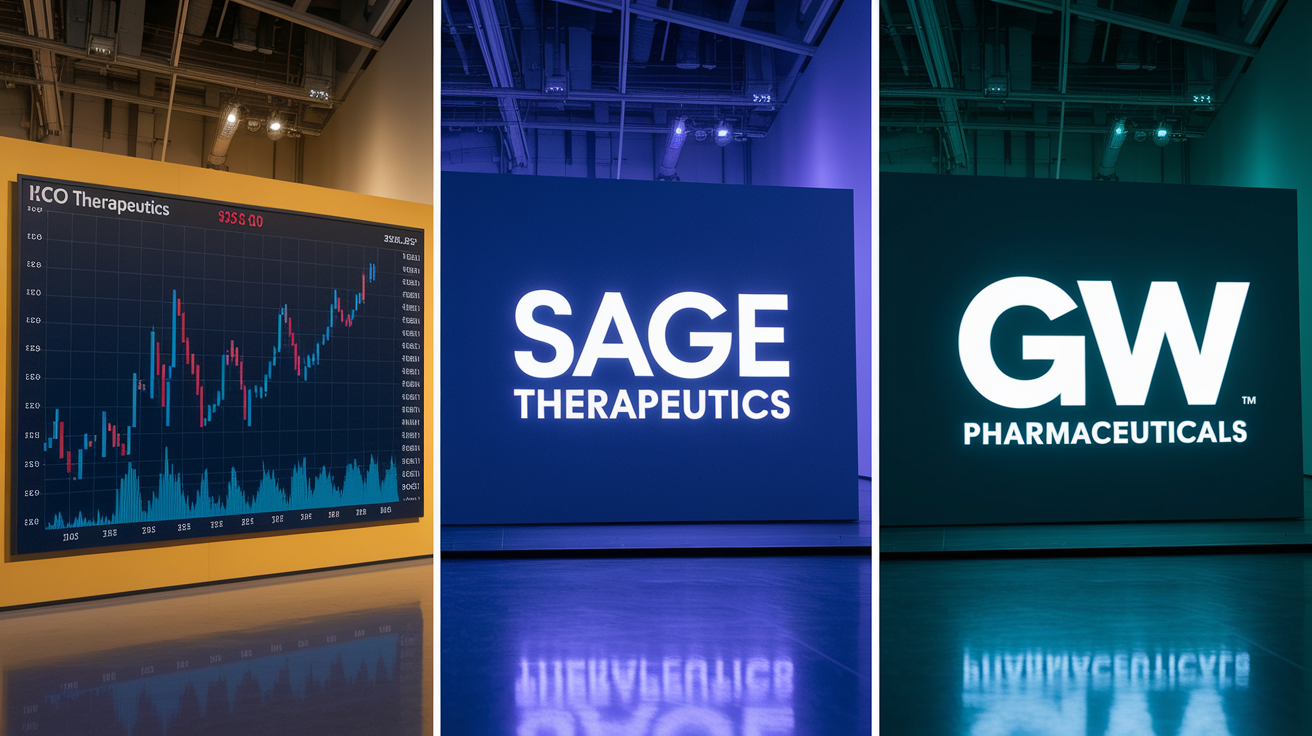
Real world examples illustrate how different catalyst types and stages drive market reactions. iCo Therapeutics, a small cap name trading on the TSX Venture Exchange under ticker ICO, saw shares jump 33 percent after announcing the initiation of a Phase 1 clinical study for Oral Amphotericin B. Although Phase 1 trials focus primarily on safety and dose escalation rather than efficacy, the milestone derisked the preclinical hypothesis and confirmed regulatory clearance to proceed, enough to revalue a micro cap biotech significantly. This case underscores that even early stage catalysts can move share prices when they represent the first human validation of a novel mechanism.
Sage Therapeutics delivered one of the most dramatic Phase 2 reactions in recent memory when shares surged as much as 85 percent to a record high following positive data in major depressive disorder. The trial met its primary endpoint with statistical significance and demonstrated a rapid onset of action, differentiating the candidate from existing antidepressants. Because Sage was a clinical stage company with limited pipeline diversification, the Phase 2 success immediately shifted the narrative from speculative science to potential blockbuster, justifying a multibillion dollar valuation leap. This move exemplifies the “two orders of magnitude” effect that IQVIA noted for small cap biotech catalyst reactions compared to large pharma.
GW Pharmaceuticals navigated the FDA process for its CBD based seizure therapy with a unanimously positive advisory committee vote ahead of a June 27, 2017 PDUFA date. The AdCom outcome removed most regulatory uncertainty, allowing the stock to rally before the formal approval announcement. GW’s case highlights the importance of tracking AdCom schedules: traders who positioned after the panel vote captured a compressed risk window, while those who waited for PDUFA day faced minimal additional upside and elevated implied volatility costs. The therapy went on to become the first FDA approved CBD pharmaceutical in the United States, validating the commercial thesis that drove the multi month rally.
| Company | Catalyst Type | % Move | Catalyst Date | Notes |
|---|---|---|---|---|
| iCo Therapeutics (ICO) | Phase 1 initiation | +33% | Not specified | First human validation derisked preclinical hypothesis |
| Sage Therapeutics (SAGE) | Phase 2 results | +85% | Not specified | Statistically significant primary endpoint in major depressive disorder |
| GW Pharmaceuticals (GWPH) | AdCom vote / PDUFA | Multi-session rally | June 27, 2017 | Unanimous AdCom approval preceded first CBD pharmaceutical approval in US |
Building an FDA Catalyst Tracking System for Investors

Automated catalyst tracking begins with ingestion pipelines that pull data from multiple authoritative sources in near real time. The FDA maintains public calendars for advisory committee meetings and posts PDUFA goal dates in approval letters, which can be scraped or accessed via structured APIs. ClinicalTrials.gov publishes trial status updates, completion dates, and primary endpoint changes, offering early signals of readout timing. For U.S. listed companies, Form 8-K filings serve as the primary disclosure vehicle for material clinical and regulatory events, filed within four business days of the trigger. By monitoring these feeds continuously, a tracking system can detect new catalysts within seconds of publication rather than hours or days, improving reaction time for time sensitive trades.
Document classification and parsing convert raw text into structured event records. Modern systems use large language models and retrieval augmented generation (RAG) endpoints to read 8-K filings, press releases, and FDA documents, then extract key fields: event type, drug name, trial phase, regulatory decision, and program status. For example, a Captide Agentic RAG endpoint processes each filing and returns a single JSON object per document. If no catalyst is detected, the model outputs { “eventType”: null, “eventDetails”: {} } to signal a negative result. If a catalyst is present, the JSON includes structured fields that map to one of five standardized event types: clinical trial results, FDA decisions, clinical holds, program terminations, and program announcements. This taxonomy enables cross company comparisons and feeds downstream analytics without manual tagging.
Storage and aggregation transform parsed events into queryable datasets. A typical implementation stores results in pandas DataFrames, with one frame per ticker containing columns for filing date, event type, drug name, trial phase, and outcome details. A top level dictionary, resultsbyticker, maps each ticker symbol to its corresponding DataFrame, allowing rapid lookups and bulk processing. For production systems, migrate DataFrames to a relational database or time series store, adding indexes on ticker, date, and event type to support fast queries and backtesting workflows. Robust logging and error handling ensure that parsing failures, API timeouts, and malformed documents are captured and flagged for review rather than silently dropping events.
Concurrency and scalability matter when tracking hundreds of tickers across multiple therapeutic areas. A process_ticker() function orchestrates the full pipeline for a single company: fetch recent 8-Ks, filter to candidate catalyst items, send each to the RAG endpoint, parse returned JSON, and append results to the ticker’s DataFrame. Wrapping these calls in a Python ThreadPoolExecutor parallelizes ingestion across tickers, cutting wall clock processing time dramatically. For a portfolio of 50 names, concurrent execution can reduce a 10 minute serial loop to under two minutes, enabling frequent refreshes throughout the trading day and ensuring the system captures late breaking disclosures before market close.
Core System Components
A production FDA catalyst tracker comprises four core components working in concert. The ingestion pipeline polls FDA calendars, clinicaltrials.gov, EDGAR for 8-Ks, and company IR pages on a scheduled cadence, typically every 15 to 60 minutes during market hours. A classification layer applies natural language processing or LLM based extraction to identify which documents contain material catalysts and which are routine disclosures, reducing noise and false positives. The storage layer persists parsed events in pandas DataFrames or a relational database, indexed by ticker, date, and event type for fast retrieval. Finally, an event taxonomy standardizes all outputs into five event types (clinical trial results, FDA decisions, clinical holds, program terminations, and program announcements), ensuring consistency across filings and enabling automated alerts, dashboards, and probability model updates. Together, these components transform fragmented public disclosures into a structured, queryable dataset that supports real time trading decisions and systematic backtesting of catalyst driven strategies.
Final Words
In the action: FDA decisions are binary events that can swing biotech valuations overnight. PDUFA days, AdCom votes, and Phase 2/3 readouts are the real catalysts, and small caps feel the moves the most.
Track PDUFA dates, NDA/BLA filings, implied volatility, cash runway, and liquidity. Set clear entry, confirmation, and invalidation levels, and keep position sizes small around big events.
Treat an FDA approval stock catalyst like a timed event: plan the trade, hedge the risk, and take partial profits when momentum meets your target. It can pay off.
FAQ
Q: What are the biotech catalysts for 2026?
A: The biotech catalysts for 2026 are PDUFA decisions, Phase 2b/3 readouts, NDA/BLA filings, AdCom votes, breakthrough or priority review grants, and partnerships or M&A that alter commercialization plans.
Q: What are the most promising biotech stocks?
A: The most promising biotech stocks are those with late-stage trials, upcoming PDUFA dates, clear efficacy data, at least 12–18 months cash runway, and manageable safety profiles; build a watchlist around these criteria.
Q: Did TNXP get FDA approval today?
A: Whether TNXP got FDA approval today depends on an official FDA announcement; verify via the FDA Drugs@FDA page or Tonix Pharmaceuticals’ press release and SEC 8-K for confirmation.
Q: Do stocks go up after FDA approval?
A: Stocks often rise after FDA approval because approvals derisk revenue and spark buying, but gains aren’t guaranteed; small caps can jump more, while safety issues or market doubts can reverse moves.