Was the 2007–2009 crash just a mortgage problem, or a tectonic shift for America?
It wasn’t just bad loans, credit froze, home values plunged, and shares fell about 57 percent while unemployment hit 10 percent.
That shock tore through jobs, savings, and the rules banks played by.
This piece lays out the core drivers — housing, securitization, and policy — and maps how they reshaped markets, neighborhoods, and regulation.
Read on for the risks to watch and the signs that would prove this story wrong.
Comprehensive Overview of the 2007–2009 Recession and Its Core Drivers

The 2007–2009 recession hit harder than any downturn since the Great Depression. Officially running eighteen months from December 2007 through June 2009, this wasn’t your typical business cycle correction. It was a full-blown financial crisis that froze credit markets, wiped out trillions in household wealth, and drove unemployment to 10.0 percent by October 2009. Real GDP dropped about 4.3 percent from peak to trough, and the economy didn’t just bounce back. The recovery crawled. Job losses totaled somewhere between 8.0 and 8.8 million.
The whole mess traced back to housing and how the financial system had wired itself to mortgages. After U.S. home prices peaked in mid-2006, they fell 20 to 30 percent in many cities. Defaults started piling up, exposing how fragile the entire debt-packaging machine had become. Subprime mortgages exploded from 7.6 percent of all loans in 2001 to 23.5 percent by 2006, flooding banks with risky paper bundled into securities nobody could actually price. When borrowers began defaulting in large numbers during 2007, the securitization pipeline seized. Credit markets froze. Liquidity vanished, lending standards got brutal overnight, and banks scrambled to patch their balance sheets.
Early warnings flashed across the system well before the recession officially started:
- August 9, 2007: BNP Paribas froze redemptions on three funds, admitting it couldn’t value subprime assets. That was the public moment liquidity started evaporating.
- Rising delinquencies: Subprime default rates climbed sharply through 2007 as adjustable-rate loans reset to payments borrowers couldn’t handle.
- Falling home prices: After mid-2006, declining prices left millions underwater.
- Credit stress: Interbank lending rates spiked. Spreads widened. Banks stopped trusting each other.
- Early writedowns: Major institutions reported billions in losses tied to mortgage-backed securities and collateralized debt obligations.
By late 2007, job losses accelerated, GDP turned negative, and stock markets started a brutal slide. The S&P 500 eventually plunged about 57 percent from its October 2007 high to the March 9, 2009 low. Foreclosure filings hit a record 2.9 million properties in 2009. Entire neighborhoods emptied out.
Root Causes Behind the 2007–2009 Recession’s Housing and Credit Meltdown

The housing bubble ran on easy credit, loose lending, and household leverage that kept climbing. Between 2001 and 2007, U.S. mortgage debt per household jumped from $91,500 to $149,500, a 63 percent spike in six years. Lenders relaxed underwriting. They offered low-doc “no-doc” loans, stated-income products, even loans with loan-to-value ratios above 100 percent. Buyers stretched budgets. Speculators flipped properties. Everyone believed prices couldn’t fall. When prices stopped rising in 2006, the loop reversed: defaults climbed, inventory swelled, prices fell harder.
Wall Street amplified the mania through securitization. Lenders originated mortgages and immediately sold them to investment banks, which pooled thousands of loans into mortgage-backed securities and sliced those pools into tranches of collateralized debt obligations. Credit-rating agencies stamped many with AAA ratings, often ignoring underlying credit quality and relying on models that assumed national housing prices wouldn’t decline. Credit default swaps allowed institutions to bet on or hedge MBS and CDO performance, but the derivatives market grew opaque and concentrated risk in a handful of players. When defaults surged in 2007, MBS and CDO valuations collapsed, and credit default swap exposures threatened to bring down major insurers and banks.
Predatory and irresponsible lending pushed borrowers into loans they couldn’t afford. Adjustable-rate mortgages with low teaser rates reset to unaffordable levels, triggering delinquencies among subprime borrowers. Brokers earned fees for originating loans regardless of performance, creating perverse incentives to approve risky credits. By 2007, defaults climbed so fast that securitization pipelines froze. Investors stopped buying MBS, banks got stuck holding unmarketable loans, and the entire shadow-banking system that relied on short-term funding to finance long-term mortgage assets found itself insolvent. A housing downturn turned into a full financial-system meltdown.
Chronological Timeline of Critical Events During the 2007–2009 Recession

The crisis went from slow burn to inferno over about two years. In 2007, stress signals multiplied. Subprime lenders filed for bankruptcy in the spring. On August 9, 2007, BNP Paribas halted redemptions on three funds, publicly acknowledging it couldn’t price mortgage-linked securities. That same summer, short-term funding markets seized up. Central banks injected emergency liquidity. By September 2007, the United Kingdom saw its first retail bank run in over a century when depositors lined up outside Northern Rock branches after the lender lost access to wholesale markets.
During 2008, the crisis escalated into systemic panic. In March, Bear Stearns collapsed over a weekend. JPMorgan Chase acquired the investment bank for an initial offer of $2 per share, later raised to $10, with Federal Reserve support. Credit spreads widened. Banks hoarded cash. Then came September 15, 2008. Lehman Brothers, holding roughly $600 billion in assets, filed for the largest bankruptcy in U.S. history. The next day, September 16, the Federal Reserve extended an $85 billion emergency credit line to American International Group to prevent the insurer’s failure from toppling counterparties around the globe. Markets froze. The commercial-paper market nearly vanished. Interbank lending rates spiked to crisis levels.
Policymakers scrambled to contain the damage. On October 3, 2008, Congress passed the Emergency Economic Stabilization Act, authorizing the Troubled Asset Relief Program with $700 billion to stabilize financial markets. Initially conceived to buy toxic assets, TARP quickly pivoted to direct capital injections into banks. The Federal Reserve slashed the federal funds rate to near zero by December 2008 and launched a suite of emergency lending facilities. Global coordination followed, with central banks providing dollar swap lines to support foreign institutions starved for dollar funding.
By early 2009, attention turned to fiscal stimulus and market stabilization. On February 17, 2009, President Obama signed the American Recovery and Reinvestment Act, a roughly $787 billion package of tax cuts, infrastructure spending, and aid to states. The S&P 500 bottomed at 676.53 on March 9, 2009, and began a slow, volatile climb. The Federal Reserve initiated large-scale asset purchases, quantitative easing, buying hundreds of billions in Treasury securities and agency mortgage-backed securities to push down long-term rates and restart credit flow.
| Event | Date | Impact |
|---|---|---|
| BNP Paribas freezes fund redemptions | August 9, 2007 | First public liquidity crisis signal; sparked global credit-market stress |
| Lehman Brothers bankruptcy | September 15, 2008 | Largest U.S. bankruptcy ($600B assets); triggered global financial panic |
| TARP authorization | October 3, 2008 | $700 billion emergency fund to stabilize banks and restore confidence |
Economic Impact of the 2007–2009 Recession on Jobs, GDP, and Markets

Real GDP contracted roughly 4.3 percent from peak to trough, erasing years of growth and leaving the economy smaller in mid-2009 than it had been in 2007. This wasn’t a quick dip followed by a V-shaped rebound. Output recovered slowly. It took until around 2011 for GDP to regain its pre-recession peak. The damage ran deeper than aggregate numbers. Entire industries shrank, business investment collapsed, and consumer spending fell as households faced job losses, falling home values, and tighter credit.
Unemployment told an even grimmer story. The jobless rate climbed from roughly 5 percent in 2007 to 10.0 percent in October 2009. Long-term unemployment, those out of work for six months or longer, reached levels not seen since the 1930s. Between December 2007 and the labor-market trough, the U.S. economy shed between 8.0 and 8.8 million nonfarm payroll jobs. Workers who lost jobs during the recession faced lasting earnings losses. Many left the labor force entirely. Young people entering the job market during the downturn experienced “labor-market scarring,” with lower wages and reduced career progression that persisted for years.
Financial markets suffered staggering losses:
- S&P 500 collapse: The index fell approximately 57 percent from its October 9, 2007 peak of around 1,565 to the March 9, 2009 low near 676.
- Volatility spike: The VIX hit record levels above 80 in late 2008, reflecting extreme uncertainty.
- Credit freeze: Corporate bond issuance dried up. Even investment-grade companies struggled to roll over short-term debt.
- Bankruptcy wave: Major firms across finance, autos, retail, and real estate filed for Chapter 11 protection as access to capital vanished.
The housing market, ground zero for the crisis, saw national home prices fall roughly 27 percent from peak to trough in major indices. Foreclosure filings reached approximately 2.9 million in 2009 alone. Millions of homeowners found themselves with negative equity, owing more on their mortgages than their homes were worth. Entire metro areas, particularly in Florida, Nevada, Arizona, and California, experienced price declines exceeding 40 percent. Communities were left blighted by vacant properties, depressing local tax revenues.
Household wealth took a brutal hit. Plummeting home values and crashing stock portfolios erased trillions of dollars in net worth. Retirement savings accounts shrank as equity markets collapsed, forcing older workers to delay retirement and younger savers to watch their 401(k) balances evaporate. The crisis didn’t just destroy wealth. It reshaped spending behavior, saving rates, and attitudes toward leverage for years.
Government and Central Bank Responses During the 2007–2009 Recession
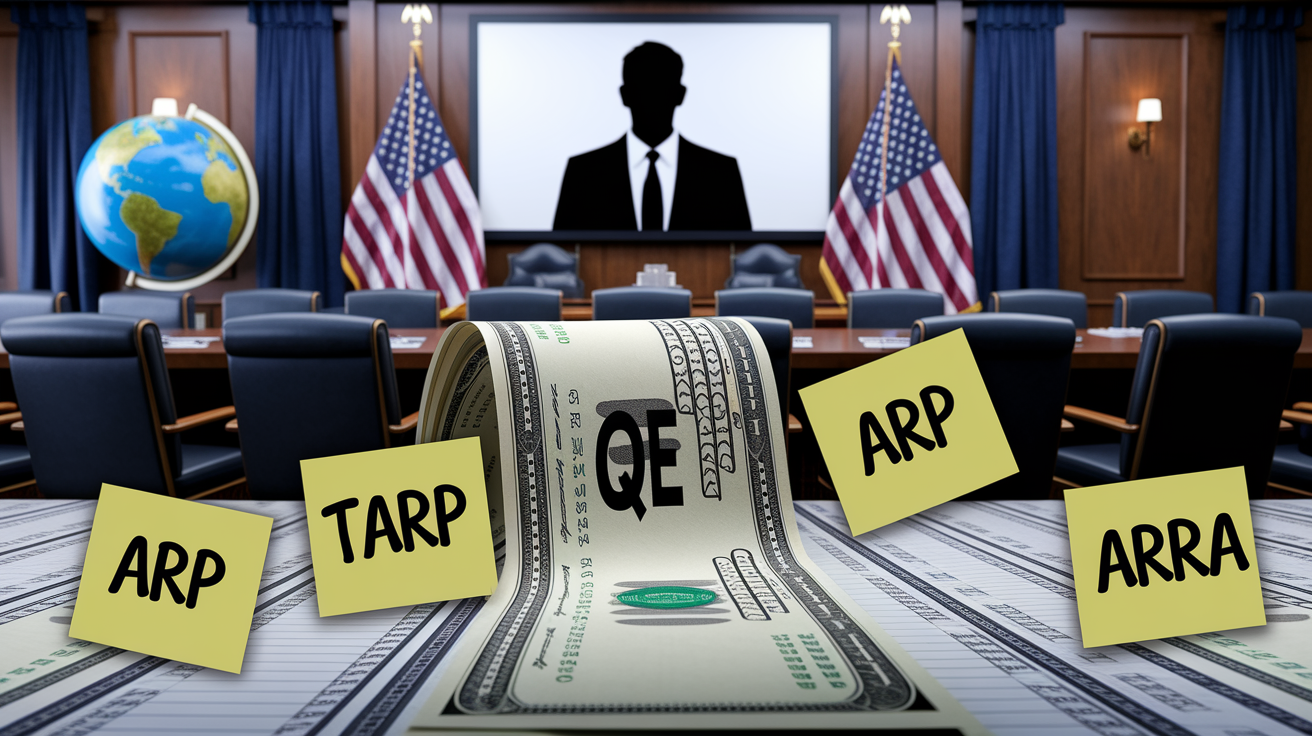
The Federal Reserve moved early and aggressively, slashing the federal funds rate from 5.25 percent in mid-2007 to a target range of 0 to 0.25 percent by December 2008. This was the first time the Fed had taken rates to the zero lower bound in modern history. It marked a turning point in monetary policy. With conventional rate cuts exhausted, the central bank turned to unconventional tools to restore liquidity and confidence. Emergency lending facilities proliferated. The Term Auction Facility provided term funding to banks, the Commercial Paper Funding Facility backstopped short-term corporate borrowing, and the Term Asset-Backed Securities Loan Facility supported consumer and small-business credit.
Fiscal authorities mobilized on an unprecedented scale. The scale and speed of government intervention during the recession broke with decades of precedent and redefined the boundaries of crisis management.
Monetary Interventions
Beyond rate cuts, the Federal Reserve’s most transformative step was launching large-scale asset purchases, quantitative easing. Starting in late 2008, the Fed bought hundreds of billions of dollars in agency debt and agency mortgage-backed securities, eventually expanding its balance sheet to over $2 trillion. QE aimed to lower long-term interest rates, support mortgage markets, and signal that the Fed would use every tool available. The central bank also extended dollar liquidity to foreign central banks through swap lines, helping European and emerging-market institutions meet dollar funding needs when cross-border credit markets froze in September and October 2008.
Fiscal Support Programs
The Troubled Asset Relief Program became the centerpiece of the fiscal response. Authorized at $700 billion on October 3, 2008, TARP initially aimed to purchase troubled mortgage assets from banks, but Treasury quickly pivoted to direct capital injections. By late 2008, nearly fifty major U.S. banks had received TARP capital, shoring up their balance sheets and restoring a measure of confidence. TARP funds also supported the auto industry, AIG, and various credit-market programs. On February 17, 2009, the American Recovery and Reinvestment Act injected roughly $787 billion in stimulus through a mix of tax cuts, unemployment benefits, infrastructure projects, and state aid, designed to arrest the economic freefall and jumpstart demand.
Global Coordination
The crisis demanded international coordination. Central banks around the world cut rates in tandem. The Federal Reserve’s dollar swap lines became a critical backstop for foreign financial systems. The G20 summit in November 2008 brought together leaders to pledge coordinated fiscal stimulus and regulatory reforms. European governments recapitalized banks, guaranteed deposits, and injected liquidity. In late November 2010, Ireland received an €85 billion bailout from the European Union and International Monetary Fund after losses in its banking sector triggered a sovereign-debt crisis. This cross-border policy response, while imperfect, prevented a complete collapse of the global financial system.
Global Transmission and International Impact of the 2007–2009 Recession

What began as a U.S. housing and mortgage crisis rapidly spread into a synchronized global recession. In 2009, world merchandise trade volumes contracted by roughly 10 to 12 percent year-over-year, the sharpest peacetime decline in global trade in modern history. Export-dependent economies in Asia and Europe saw demand evaporate, manufacturing output plunged, and unemployment spiked. Advanced economies entered deep recessions, with GDP contracting across the eurozone, the United Kingdom, and Japan, while emerging markets that had enjoyed years of rapid growth experienced sharp slowdowns.
European banking stress intensified during September and October 2008 as major institutions in Belgium, France, Germany, Italy, the Netherlands, Sweden, and Switzerland revealed large exposures to U.S.-origin mortgage-backed securities and collateralized debt obligations. Governments stepped in with capital injections and guarantees to prevent bank runs. Iceland’s banking sector collapsed entirely in late 2008. Its three largest banks, which had grown to many multiples of the country’s GDP, failed in quick succession, forcing the government to seek an international rescue and imposing capital controls. The crisis exposed how deeply interconnected global finance had become. A mortgage default in California could trigger a funding squeeze in London and a bank failure in Reykjavik.
Emerging markets faced a double shock. Capital that had flowed into developing economies during the boom years reversed abruptly, sending currencies tumbling and interest rates soaring. Countries reliant on commodity exports saw revenues collapse as global demand cratered. Central banks in emerging markets were forced to raise rates to defend currencies even as their economies contracted, creating a painful policy dilemma. International institutions, including the IMF, extended emergency credit lines to stabilize vulnerable economies. The global nature of the downturn underscored that twenty-first-century financial crises don’t respect borders. Liquidity shocks, credit freezes, and confidence collapses spread at the speed of electronic markets.
Post‑Recession Recovery Timeline and Long‑Term Effects of the 2007–2009 Recession

The recession officially ended in June 2009, but the recovery felt anything but robust for millions of Americans. Financial markets bottomed on March 9, 2009, when the S&P 500 closed at 676.53, then began a volatile climb that would eventually carry equities to new highs. GDP growth turned positive in the third quarter of 2009 and gradually accelerated, reaching its pre-recession peak by around 2011. Yet this output recovery masked deep scars in the labor market and household finances. Job creation lagged far behind historical rebounds. It took until roughly 2014 for private-sector payrolls to return to their December 2007 peak.
The housing market’s stabilization and recovery stretched well into the 2010s. Home prices stopped falling in most metro areas by 2012, but climbed back slowly and unevenly. Many hard-hit markets in the Sun Belt didn’t regain peak prices until the mid-to-late 2010s. Some neighborhoods never fully recovered. Foreclosures continued at elevated levels for years. The shadow inventory of distressed properties kept a lid on price gains. Homeownership rates fell as millions of families lost homes and tighter lending standards made it harder for new buyers to qualify, shifting more households into rental markets and contributing to rising rents.
Long-term structural effects reshaped the economy and society:
- Rising income inequality: The recovery disproportionately benefited high-income households and asset owners, while middle- and lower-income families faced stagnant wages and diminished wealth.
- Wage stagnation: Workers who remained employed saw little real wage growth through the early 2010s. Those who lost jobs during the recession often returned to work at lower pay.
- Uneven geographic recovery: Coastal metro areas and tech hubs bounced back faster, while Rust Belt cities and rural regions experienced prolonged stagnation, widening regional economic divides.
Household balance sheets bore lasting damage. Families spent years deleveraging, paying down mortgage debt, credit cards, and other liabilities, which depressed consumer spending and slowed the recovery. The combination of lost home equity, diminished retirement savings, and interrupted careers left many households worse off a decade after the crisis than they had been before it began.
Regulatory Reforms and Lessons Learned From the 2007–2009 Recession

The crisis laid bare profound failures in financial regulation, risk management, and systemic oversight. Credit-rating agencies had stamped complex mortgage securities with AAA ratings based on flawed models and conflicts of interest. They were paid by the issuers of the securities they rated. Bank supervisors failed to recognize the build-up of risk in off-balance-sheet vehicles and the shadow-banking system, where leverage and maturity mismatches mirrored the vulnerabilities of traditional banks without the same regulatory constraints. Securitization had been sold as a way to spread risk, but instead it concentrated exposures, obscured true credit quality, and severed the link between lenders and borrowers.
In response, policymakers overhauled the regulatory architecture. The scale of reform aimed to ensure that the mistakes of 2007–2009 wouldn’t be repeated, though debates persist over whether the measures went far enough, or too far.
Post‑Crisis Regulatory Frameworks
The Dodd‑Frank Wall Street Reform and Consumer Protection Act, signed into law in July 2010, represented the most sweeping financial regulation since the New Deal. Dodd‑Frank created the Financial Stability Oversight Council to monitor systemic risk across the entire financial system, not just individual institutions. It mandated annual stress tests for large banks, forcing them to demonstrate they could withstand severe economic shocks without taxpayer support. The Volcker Rule restricted proprietary trading by deposit-taking banks, aiming to separate speculative activities from core lending. A new Consumer Financial Protection Bureau was established to police mortgage lending, credit cards, and other consumer products, addressing the predatory practices that had fueled the subprime boom.
International Capital and Liquidity Reforms
On the global stage, the Basel III accord, negotiated through the Basel Committee on Banking Supervision, imposed higher capital requirements, introduced new liquidity standards, and capped leverage ratios. Banks were required to hold more and better-quality capital as a buffer against losses, maintain sufficient liquid assets to survive a thirty-day funding freeze, and limit their use of borrowed money relative to equity. These reforms aimed to make the banking system more resilient and reduce the odds that a single institution’s failure could cascade through the system. Macroprudential tools, such as countercyclical capital buffers and enhanced supervision of systemically important financial institutions, gave regulators new levers to lean against credit booms and monitor cross-border risks, embedding the lessons of 2007–2009 into the architecture of twenty-first-century finance.
Final Words
In the action, we mapped how a housing bubble, loose lending, and opaque securities turned into a credit crunch, then followed the shock points from BNP Paribas to Lehman and AIG.
We laid out the measurable fallout—GDP losses, millions of job cuts, market collapse—and the policy playbook that followed: rate cuts, QE, TARP, and stimulus, plus long‑term reforms.
Treat this as a checklist: watch credit, housing, and bank health. The 2007 2009 recession taught hard lessons, and those lessons help you spot trouble sooner and act smarter going forward.
FAQ
Q: What caused the 2007 to 2009 recession?
A: The 2007 to 2009 recession was caused by the housing bubble burst, explosive subprime lending, failing mortgage securitization, and a credit crunch that toppled banks; by 2009 GDP fell ~4.3% and unemployment spiked.
Q: What happened in the 2009 recession?
A: The 2009 recession saw GDP contracting, job losses peaking (unemployment near 10%), massive foreclosures, stock-market lows, and major bank rescues and stimulus to stabilize credit and restore growth.
Q: Was 2007 a recession or depression?
A: 2007 was the start of a recession, not a depression; the NBER dates the downturn from December 2007 to June 2009, known as the Great Recession, the worst U.S. downturn since the 1930s.
Q: When was the worst recession in the USA?
A: The worst recession in the USA was the Great Depression, beginning after the 1929 crash and deepening through the early 1930s; the 2007 to 2009 Great Recession was the worst since then.